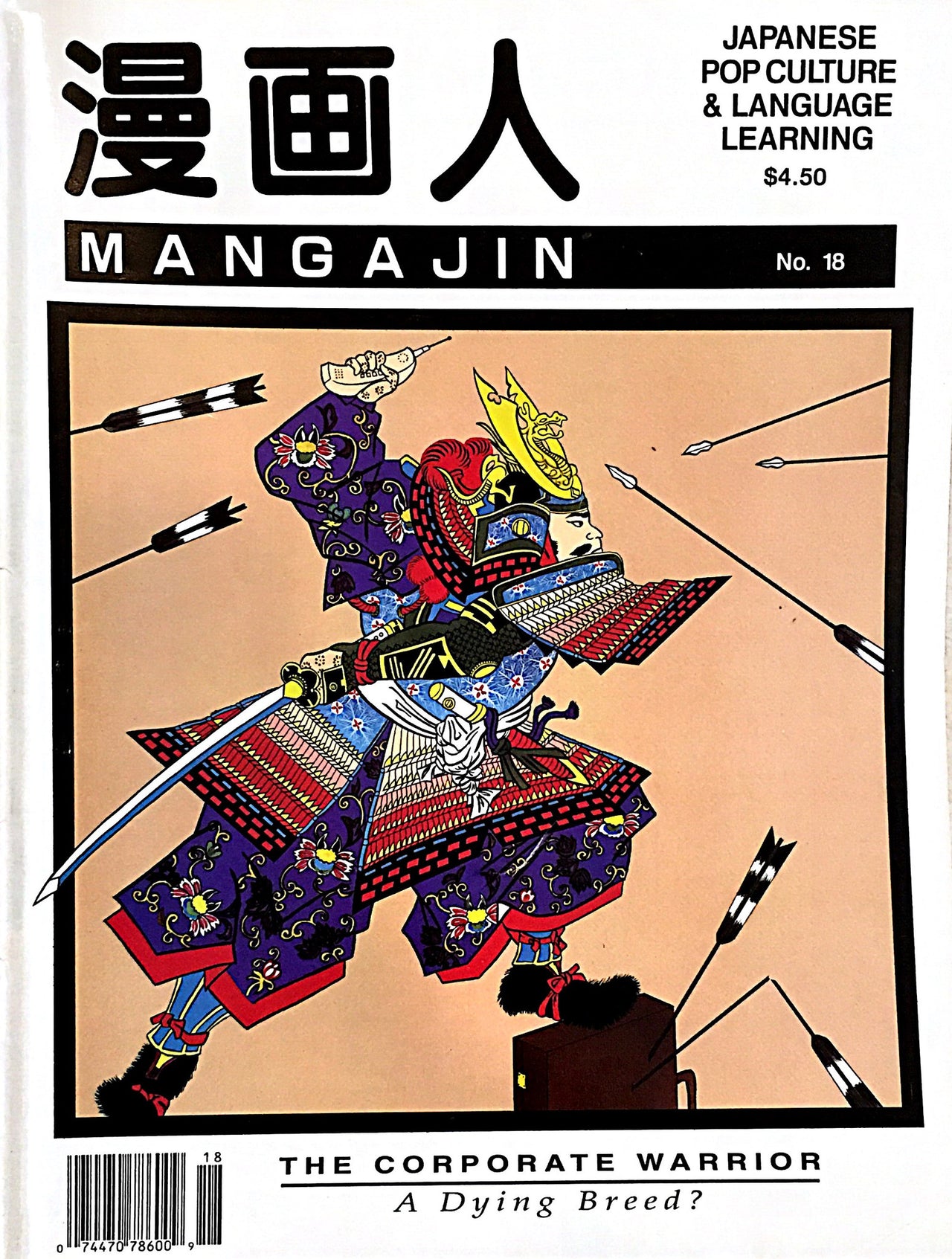
Mangajin 18
PLEASE NOTE: Mangajin ceased publication in 1998. These back issues may be new or used, but they will not be pristine. A few are still in sealed bags (for mailing), but even those are unlikely to be pristine due to shelf-wear and the amount of time passed. Please consider these as learning tools to be used rather than for collecting. That being said, if condition is important to you, please contact us with specific issues and we'll send you photos of the actual items.
Mangajin was a wonderful magazine for learners of Japanese. Each issue somehow had something for every level, but we recommend them most for upper beginners.
Those interested in translation will love how Mangajin breaks down the manga it presents, explaining grammar, vocabulary, and cultural references with ease.
The cover image above is for this particular issue. The sample pages inside may or may not be from this exact issue. See below for a table of contents (retrieved from http://www.nyx.net/~cbrown/mangajin/mangajin_toc.html)
The Corporate WarriorA Dying Breed?
FEATURES
特集
tokushu
6
Kigyo Senshi, The Corporate Warrior
Is the Japanese "salaryman" a selfless corporate soldier, prepared to make even the ultimate sacrifice for his company? There seems to be dissension in the ranks.
DEPARTMENTS
連載/コラム
rensai / koramu
4
Letters
Seward's compaint; raves for The Tunnels; ablooper story, & more.
5
Brand News
What do you call a new kind of washing machine that cleans with air bubbles?
14
Books
Rising Sun, by Michael Crichton; Shoshaman, by Arai Shinya; books on business
21
Computer Corner
Info on CompuServe's Japan and Japanese-related forums
22
Basic Japanese: Informal Politeness
The word "politeness" is a convenient simplification, but there are actually several dimensions involved.
76
Classifieds
78
Mangajin · Mono
New this issue: Obatarian 5-volume set; O-jama Shimasu 3-volume set
80
Vocabulary Summary
MANGA
漫画
manga
10
Sarariiman Senka · サラリーマン専科, by Shoji Sadao
18
Calvin and Hobbes, by Bill Watterson
26
Obatarian · オバタリアン, by Hotta Katsuhiko
27
O-jama Shimasu · オジャマします, by Imazeki Shin
29
Eigyo Tenteko Nisshi · 営業てんてこ日誌, by Gyu & Kondo
45
The Phoenix · 火の鳥, by Tezuka Osamu
63
Oishinbo · 美味しんぼ, by Kariya & Hanasaki
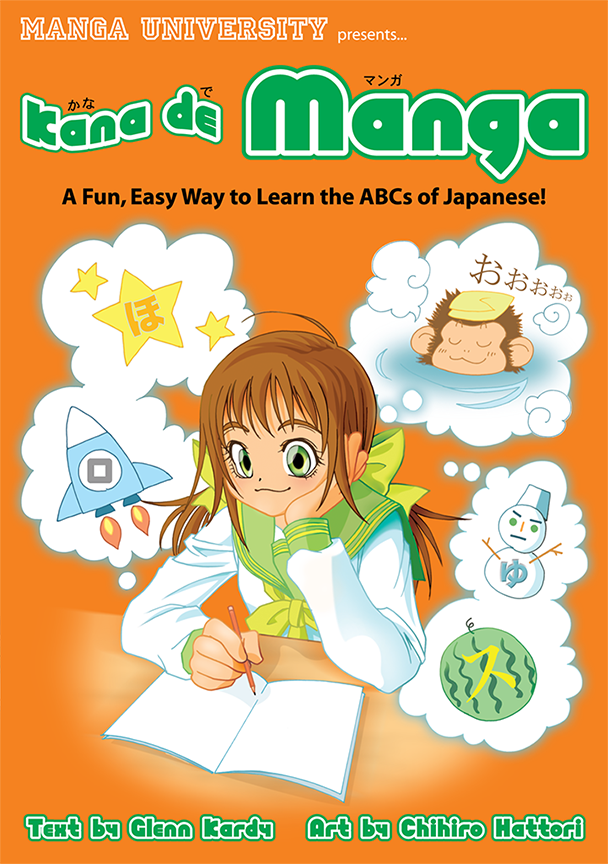
Kana de Manga
Paperback. 144 pages. 7 x 5 inches.
-------------------
Great for beginners!
American pop culture is turning Japanese. Every day, millions of kids spend hours watching translated anime on Cartoon Network and reading telephone book-sized comics called manga. From Spirited Away to Shonen Jump, if the label says "Made in Japan," it's cool.
But what if you want to enjoy anime and manga in its original language? Written Japanese consists of three scripts: the phonetic hiragana and katakana syllabaries, each comprised of 46 characters (collectively known as kana); and kanji, a complex set of characters based on Chinese ideographs. Hiragana and katakana are the true "ABCs of Japanese," as they can be used to write complete sentences. Children in Japan learn to read and write hiragana and katakana long before they are introduced to kanji. Most manga targeted toward the youngest readers in Japan are also written completely in kana.
Kana de Manga makes learning hiragana and katakana easy and fun for students who already enjoy Japanese comics. Each page has a humorous manga illustration representing a word that begins with the hiragana or katakana character featured prominently at the top. A brief explanation accompanies each drawing; the English equivalent of the word is given, and there is a work area where students can practice writing the characters.
Written by Glenn Kardy, editor of several volumes in the popular How to Draw Manga series, including Getting Started, the first book of its kind to be used at major universities in the United States (UCLA) and Japan (Waseda). Artwork by Chihiro Hattori. Features a foreword by Ronald A. Morse, retired professor of Japan Studies at UCLA and the University of Nevada, Las Vegas.
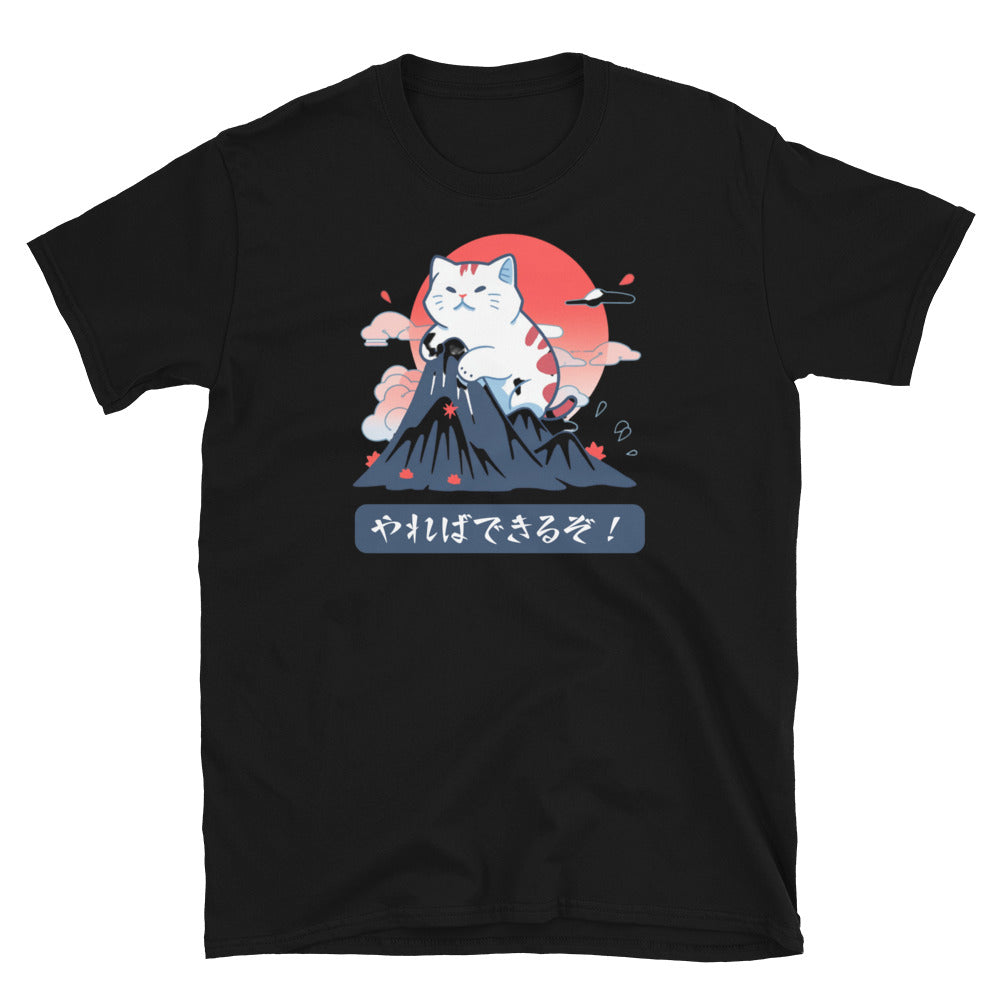
Reach Your Summit Short-Sleeve Unisex T-Shirt
This uplifting design features a cartoon cat sitting serenely on a mountain top against a pink and orange sunset sky, with Japanese text below translating to "If you try, you can do it!" for an inspiring and peaceful mood. The Japanese is pronounced as "yareba dekiru zo!" The cat's calm expression encourages perseverance and achievement.
You've now found the staple t-shirt of your wardrobe. It's made of 100% ring-spun cotton and is soft and comfy. The double stitching on the neckline and sleeves add more durability to what is sure to be a favorite! • 100% ring-spun cotton • Sport Grey is 90% ring-spun cotton, 10% polyester • Dark Heather is 65% polyester, 35% cotton • 4.5 oz/yd² (153 g/m²) • Shoulder-to-shoulder taping • Quarter-turned to avoid crease down the center • Blank product sourced from Bangladesh, Nicaragua, Honduras, Dominican Republic, Haiti or Guatemala
![Learn Japanese with Yokai! Yamanba, the Mountain Witch [Paperback]](http://www.thejapanshop.com/cdn/shop/products/yamanba-cover-ebook-400_1280x.jpg?v=1676905200)
Learn Japanese with Yokai! Yamanba, the Mountain Witch [Paperback]
Learn Japanese with 妖怪 Vol. 6: 山姥(やまんば) [PAPERBACK + DIGITAL]
A folklore-based Japanese reader for upper beginners who want to build real reading confidence while exploring darker traditional tales.
Physical paperback • Includes free digital files for this volume (PDF, MP3 audio, and Anki vocabulary deck)
Format Preview (From Another Volume)
This preview is from a different book in the series and is shown to demonstrate the format, layout, audio style, and learning approach. This 山姥(やまんば) volume follows the same structure.
Normal Speed Audio (Sample)
Slow Speed Audio (Sample)
PDF Preview (Sample) Open in new tab
About This Volume
Living in shadows and the in-between world of dreams and reality, 妖怪 thrive in the Japanese imagination. They may appear as monsters, ghosts, unnatural beings, or even everyday objects that have taken on a life of their own.
The 山姥(やまんば) is a terrifying mountain witch. She lives deep in the mountains and devours anyone who wanders into her domain. Unlike playful or mischievous yōkai, the 山姥 represents pure danger, isolation, and the fear of the wilderness.
In this volume, you will explore two classic legends involving the 山姥. One tells the story of an ox-cart man who encounters her during his deliveries. The other follows a young priest armed with three magical charms that may protect him from her power.
These stories are darker than most in the series and offer a fascinating look at how fear, survival, and faith appear in traditional Japanese folklore.
Length: 201 pages
What This Book Includes
Multiple traditional stories centered on 山姥(やまんば)
Each story presented in three formats:① Sentence-by-sentence Japanese with explanations② Japanese-only version for reading practice③ Full English translation to confirm understanding
Sentence-by-sentence sections include furigana over kanji, a complete glossary, and clear explanations of important grammar patterns in plain English
Free audio downloads included (link provided on the final page of the book)
Each story includes both normal-speed and slow-speed recordings read by Yumi
Includes PDF e-book versions, sound files, and an Anki deck of the vocabulary at no extra charge
Stories Included
牛方と山姥(うしかたとやまんば)
山姥と三つの護符(やまんばとみっつのごふ)
Who Is This Book For?
This book is designed so that both newer learners and intermediate learners can benefit. The ideal level, however, is upper beginner, roughly around JLPT N4.
If you are ready to move beyond simple textbook sentences and want to read traditional Japanese stories—with guidance—this volume is an excellent challenge.
Ready to face one of Japan’s most frightening yōkai?
Click Add to Cart and complete your journey through the Learn Japanese with 妖怪 series.
![Japanese Sentences: Beginning Phrases [Paperback]](http://www.thejapanshop.com/cdn/shop/products/beginner-ebook-400_1280x.jpg?v=1649278152)
Japanese Sentences: Beginning Phrases [Paperback]
Note: This is the physical paperback version which will be shipped to your location. This physical book also includes the digital version, but if you are looking for the digital only version, please click here for the bundle with this book in it. Digital products have no shipping charges!
68 pages | Paperback | Includes FREE MP3s and eBook formats
Learn important Japanese sentences one word at a time
An in-depth study of the sentence structure of 21 useful phrases with many more variations and examples.
What you'll get:
68 Page PDF
Includes ePub & Mobi files
MP3s with every Japanese example sentence
Ready to improve your Japanese while increasing your cultural knowledge? Add to cart now.

Makoto Magazine #46 - All the Fun Japanese Not Found in Textbooks
Makoto E-Zine series #46
Recommended for beginners and lower intermediates of Japanese.
NOTE: The print version is printed on demand and can take up to two weeks to arrive (usually sooner!). You'll instantly get the download version with either choice.
Now includes handy QR codes on each page to scan and instantly hear that page's sound files. (You can still download the sound files and PDF for no extra charge)FREE sound files of the stories read by a native Japanese speaker--download link found on the last page. Listen while reading.
The Fun Japanese Not Found in Textbooks. If you like our readers and lessons, you will love Makoto, the e-zine filled with articles on kanji, culture, idioms, proverbs, geography, history, etymology, JLPT tips, Japanese trivia, and much more. Not only that, but every issue will include a brand new reader with newly recorded high-quality MP3s for you to download for no extra charge.
IN THIS ISSUE: December 2021
Laughs, Jokes, Riddles, and Puns
Vocabulary: あいづちを打つ
Prefecture Spotlight: Fukui
Etymology: 民
Anime Phrase of the Day
Haiku : 芥川龍之介
Kanji Spotlight: 曜
Grammar Time! ながら
Japanese Readers: Trains (beginner) + Kicchomu (Intermediate)
Buy now and start reading in seconds.

Makoto Japanese e-Zine #24 February 2020 | Digital Download + MP3s
➡️ WAIT! Want to save a dollar and get the latest issue each month? Become a member of our Makoto+ club and not only save and download new Makoto issues, but also access web-versions of the past three Makoto issues. Want more? Well, Makoto+ members also get a 10% reusable coupon good for anything at theJapanShop.com and each month, we will post a new eBook for you to download free of charge. Subscribe today for only $3 a month or $36 a year. Cancel at any time! Click here to learn more.
Makoto E-Zine series #24Recommended for beginners and lower intermediates of Japanese.FREE MP3s of the stories read by a native Japanese speaker--download link found on the last page. Listen while reading.The Fun Japanese Not Found in Textbooks. If you like our readers and lessons, you will love Makoto, the e-zine filled with articles on kanji, culture, idioms, proverbs, geography, history, etymology, JLPT tips, Japanese trivia, and much more. Not only that, but every issue will include a brand new reader with newly recorded high-quality MP3s for you to download for no extra charge. IN THIS ISSUE: February 2020TWO NEW READERS: Let's Read! Japanese Superstitions (beginner) + the Tengu (Intermediate)* Laughs, Jokes, Riddles, and Puns* Vocabulary: Japanese Proverb* Prefecture Spotlight: Nagasaki* Etymology: otoshimae* Anime Phrase of the Day* Haiku Masaoka Shiki* Kanji Spotlight: Kanji Countries* Grammar Time! kamoshirenai* Japanese Readers: Japanese Superstitions (beginner) + the Tengu (Intermediate)
➡️ LEARN ABOUT BECOMING A MAKOTO+ MEMBER. CLICK HERE
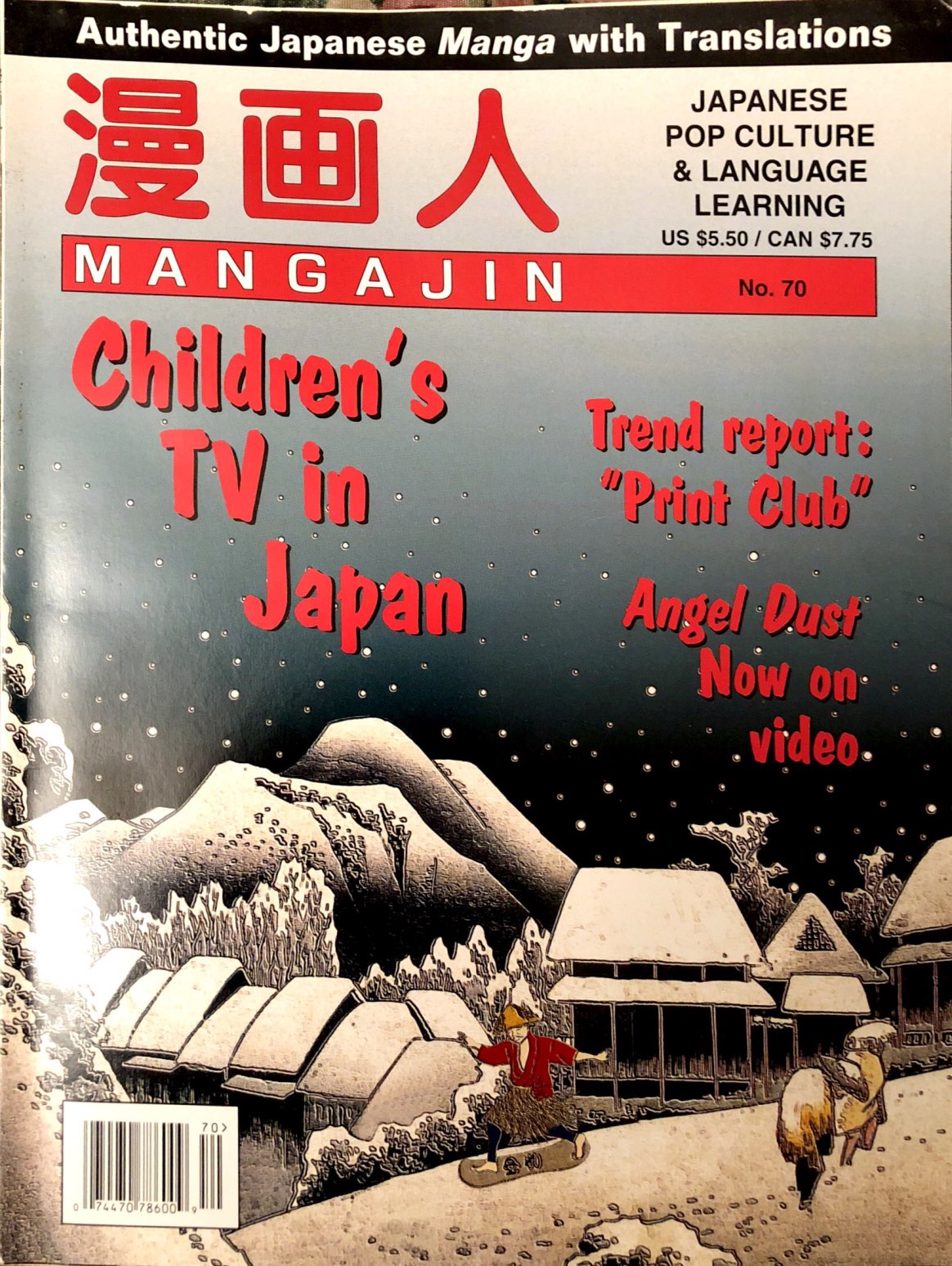
Mangajin 70
PLEASE NOTE: Mangajin ceased publication in 1998. These back issues may be new or used, but they will not be pristine. A few are still in sealed bags (for mailing), but even those are unlikely to be pristine due to shelf-wear and the amount of time passed. Please consider these as learning tools to be used rather than for collecting. That being said, if condition is important to you, please contact us with specific issues and we'll send you photos of the actual items.
Mangajin was a wonderful magazine for learners of Japanese. Each issue somehow had something for every level, but we recommend them most for upper beginners.
Those interested in translation will love how Mangajin breaks down the manga it presents, explaining grammar, vocabulary, and cultural references with ease.
The cover image above and the table of contents below are for this particular issue. The extra sample pages inside may or may not be from this exact issue.
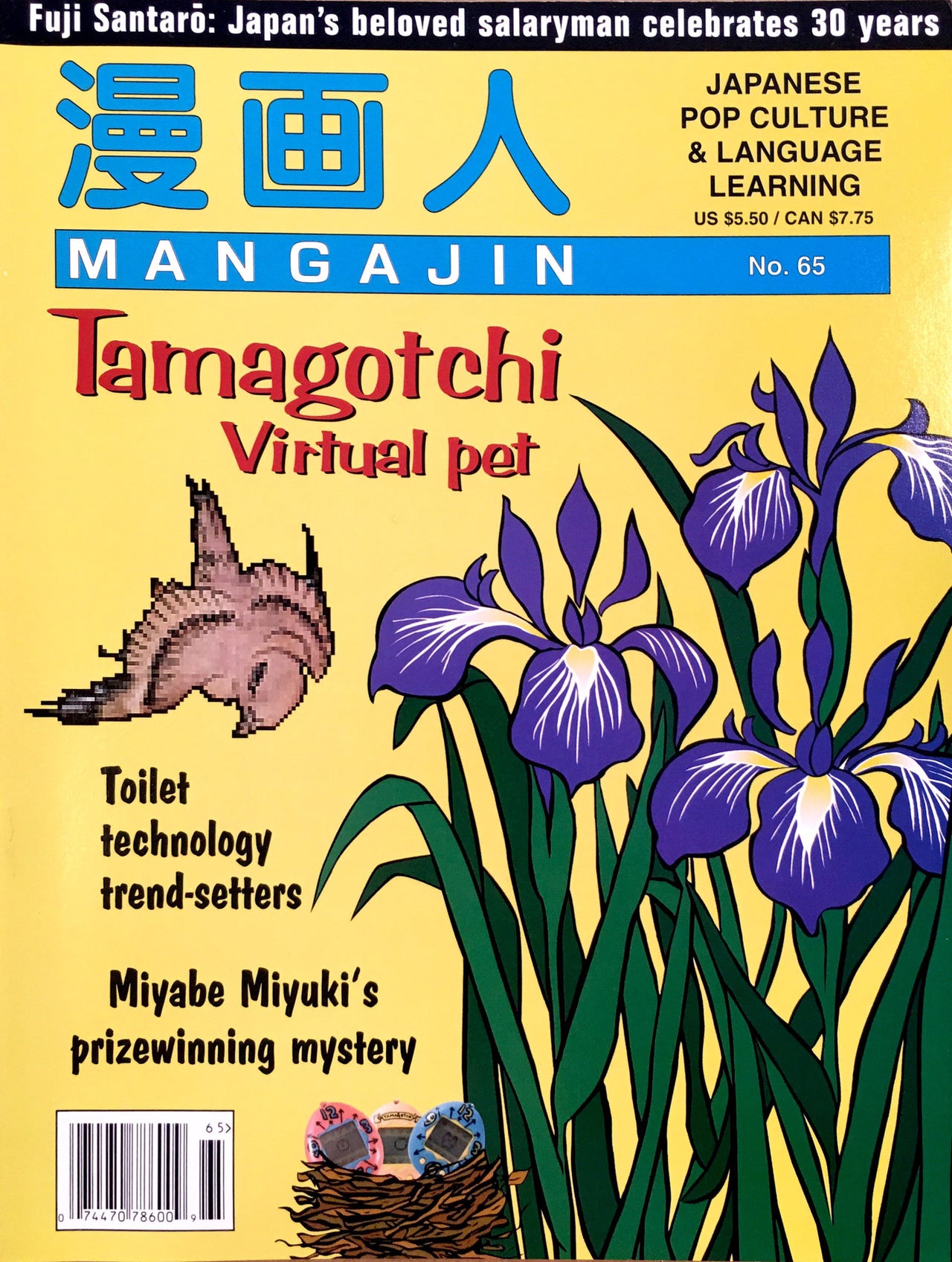
Mangajin 65
PLEASE NOTE: Mangajin ceased publication in 1998. These back issues may be new or used, but they will not be pristine. A few are still in sealed bags (for mailing), but even those are unlikely to be pristine due to shelf-wear and the amount of time passed. Please consider these as learning tools to be used rather than for collecting. That being said, if condition is important to you, please contact us with specific issues and we'll send you photos of the actual items.
Mangajin was a wonderful magazine for learners of Japanese. Each issue somehow had something for every level, but we recommend them most for upper beginners.
Those interested in translation will love how Mangajin breaks down the manga it presents, explaining grammar, vocabulary, and cultural references with ease.
The cover image above and the table of contents below are for this particular issue. The extra sample pages inside may or may not be from this exact issue.
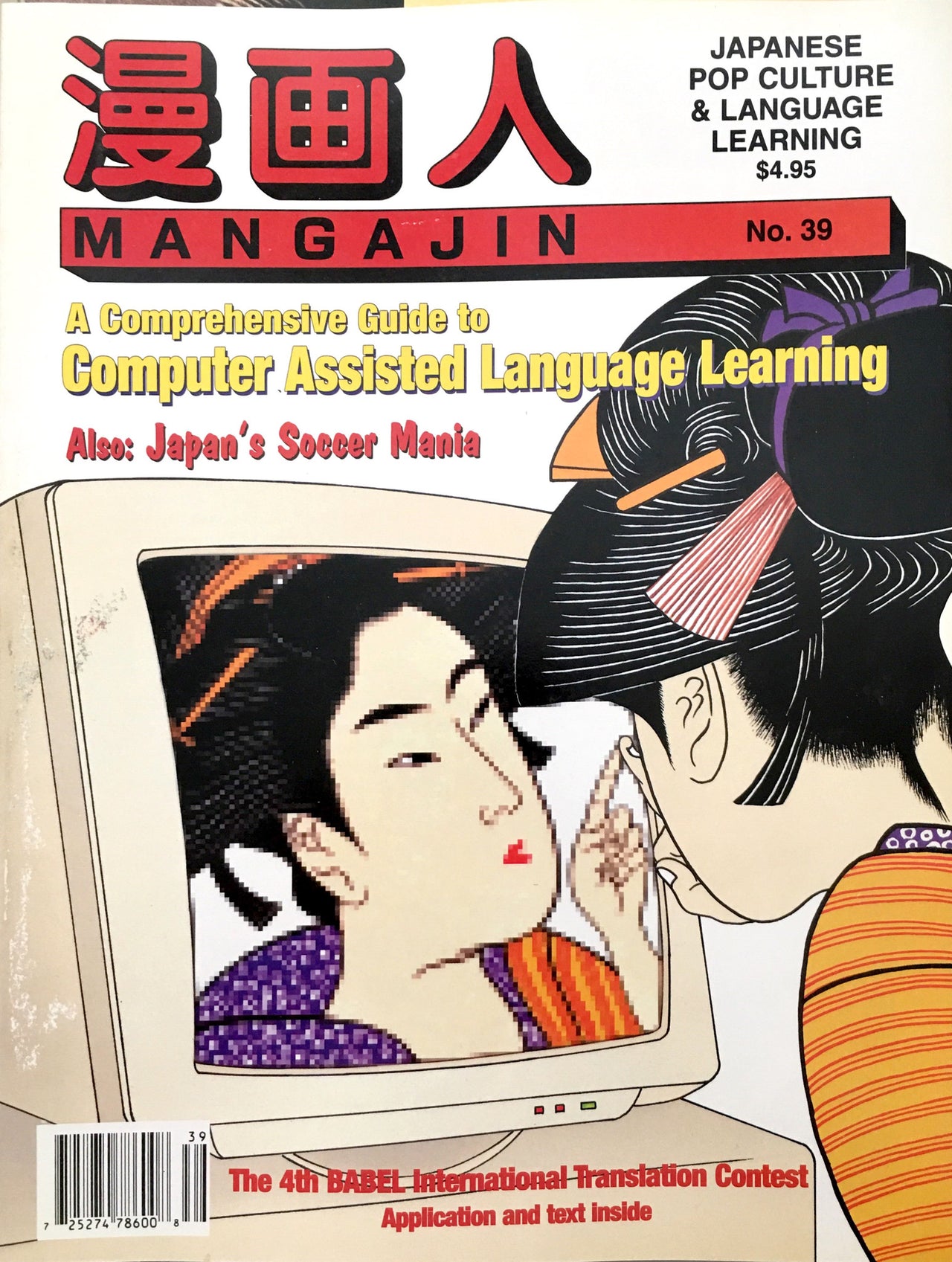
Mangajin 39
PLEASE NOTE: Mangajin ceased publication in 1998. These back issues may be new or used, but they will not be pristine. A few are still in sealed bags (for mailing), but even those are unlikely to be pristine due to shelf-wear and the amount of time passed. Please consider these as learning tools to be used rather than for collecting. That being said, if condition is important to you, please contact us with specific issues and we'll send you photos of the actual items.
Mangajin was a wonderful magazine for learners of Japanese. Each issue somehow had something for every level, but we recommend them most for upper beginners.
Those interested in translation will love how Mangajin breaks down the manga it presents, explaining grammar, vocabulary, and cultural references with ease.
The cover image above is for this particular issue. The sample pages inside may or may not be from this exact issue.

Mangajin 24
PLEASE NOTE: Mangajin ceased publication in 1998. These back issues may be new or used, but they will not be pristine. A few are still in sealed bags (for mailing), but even those are unlikely to be pristine due to shelf-wear and the amount of time passed. Please consider these as learning tools to be used rather than for collecting. That being said, if condition is important to you, please contact us with specific issues and we'll send you photos of the actual items.
Mangajin was a wonderful magazine for learners of Japanese. Each issue somehow had something for every level, but we recommend them most for upper beginners.
Those interested in translation will love how Mangajin breaks down the manga it presents, explaining grammar, vocabulary, and cultural references with ease.
The cover image above is for this particular issue. The sample pages inside may or may not be from this exact issue.
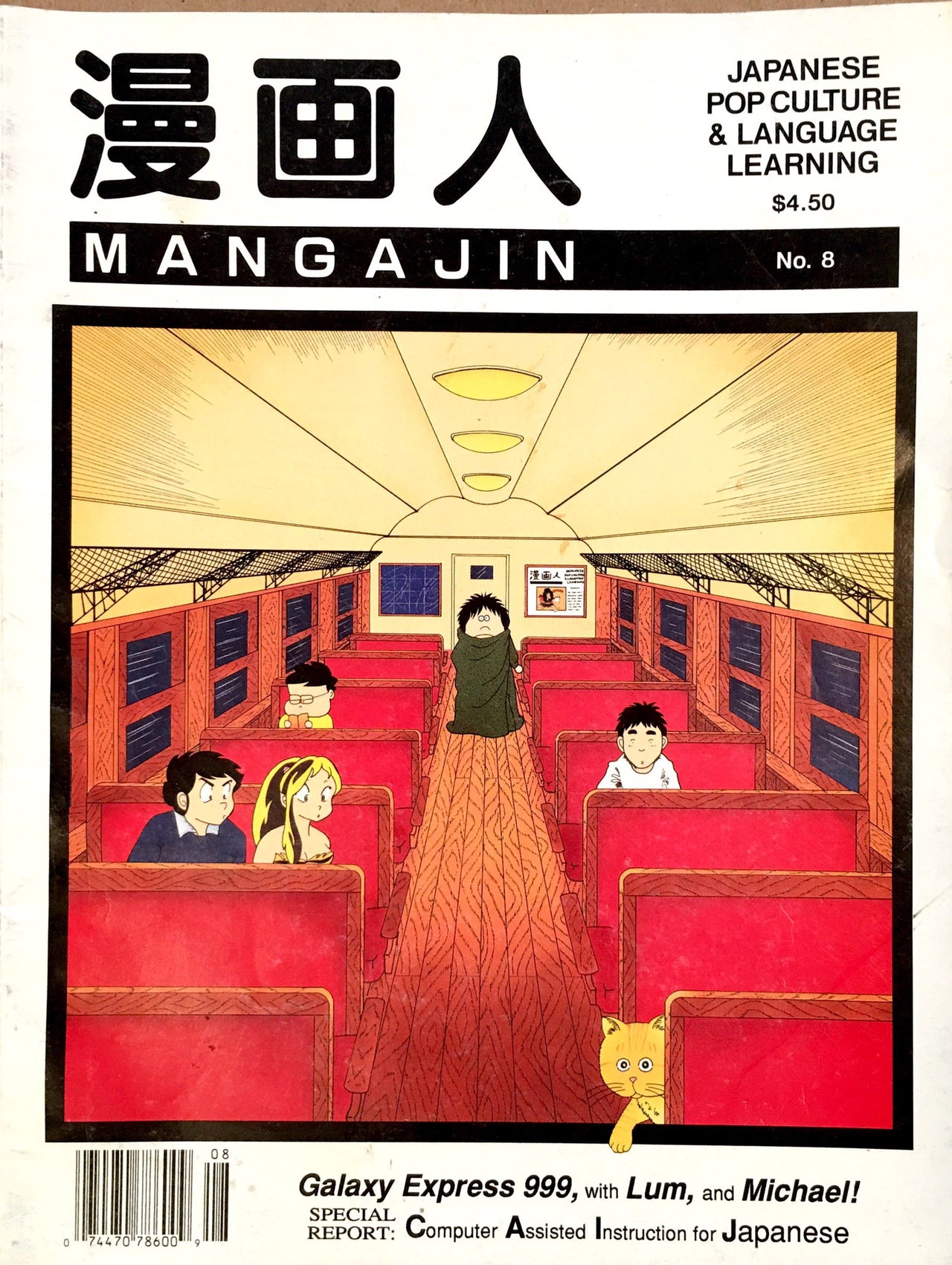
Mangajin 08
PLEASE NOTE: Mangajin ceased publication in 1998. These back issues may be new or used, but they will not be pristine. A few are still in sealed bags (for mailing), but even those are unlikely to be pristine due to shelf-wear and the amount of time passed. Please consider these as learning tools to be used rather than for collecting. That being said, if condition is important to you, please contact us with specific issues and we'll send you photos of the actual items.
Mangajin was a wonderful magazine for learners of Japanese. Each issue somehow had something for every level, but we recommend them most for upper beginners.
Those interested in translation will love how Mangajin breaks down the manga it presents, explaining grammar, vocabulary, and cultural references with ease.
The cover image above and the table of contents below are for this particular issue. The extra sample pages inside may or may not be from this exact issue.