
I'm Studying Japanese. Please Speak to Me Mug
Great conversation starter to meet native Japanese speakers as well as fellow language learners. The mug says "Nihongo o benkyou shite imasu. Hanashi kakete kudasai." This means I am studying Japanese; please speak to me. Whether you're drinking your morning coffee, your evening tea, or something in between – this mug's for you! It's sturdy and glossy with a vivid print that'll withstand the microwave and dishwasher. • Ceramic • Dishwasher and microwave safe • White and glossy
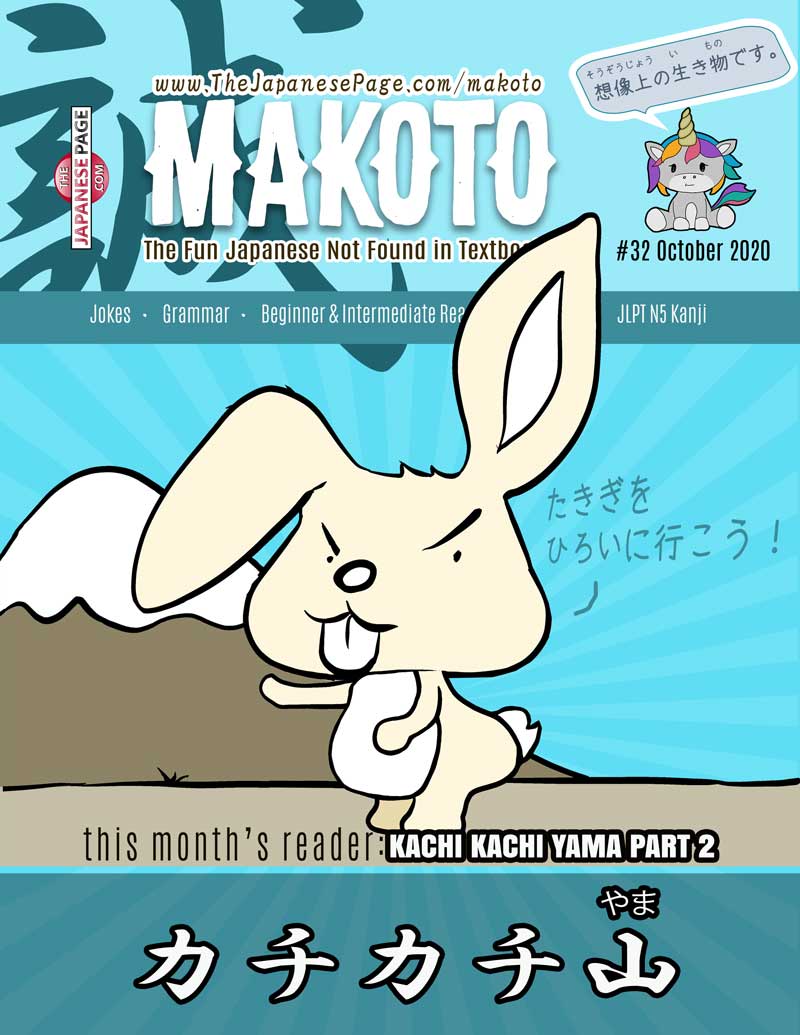
Makoto Japanese e-Zine #32 October 2020 | Digital Download + Sound Files
➡️ WAIT! Want to save a dollar and get the latest issue each month? Become a member of our Makoto+ club and not only save and download new Makoto issues, but also access web-versions of the past three Makoto issues. Want more? Well, Makoto+ members also get a 10% reusable coupon good for anything at theJapanShop.com and each month, we will post a new eBook for you to download free of charge. Subscribe today with a free 7 day trial. Cancel at any time! Click here to learn more.
Makoto E-Zine series #32Recommended for beginners and lower intermediates of Japanese.FREE MP3s of the stories read by a native Japanese speaker--download link found on the last page. Listen while reading.The Fun Japanese Not Found in Textbooks. If you like our readers and lessons, you will love Makoto, the e-zine filled with articles on kanji, culture, idioms, proverbs, geography, history, etymology, JLPT tips, Japanese trivia, and much more. Not only that, but every issue will include a brand new reader with newly recorded high-quality MP3s for you to download for no extra charge. IN THIS ISSUE: October 2020TWO NEW READERS: Frank and the Obaasan Season Two Episode Four (beginner) + Kachi Kachi Yama Part II (Intermediate)
Laughs, Jokes, Riddles, and Puns
Vocabulary: Using your chin
Prefecture Spotlight: Kyoto
Special: About Fushimi Inari Taisha
Etymology: Akachan
Anime Phrase of the Day
Haiku: Natsume Souseki
Kanji Spotlight
Grammar Time!
Japanese Readers: Frank and the Obaasan Season Two Episode Four (beginner) + Kachi Kachi Mountain Part II (Intermediate)
➡️ LEARN ABOUT BECOMING A MAKOTO+ MEMBER. CLICK HERE
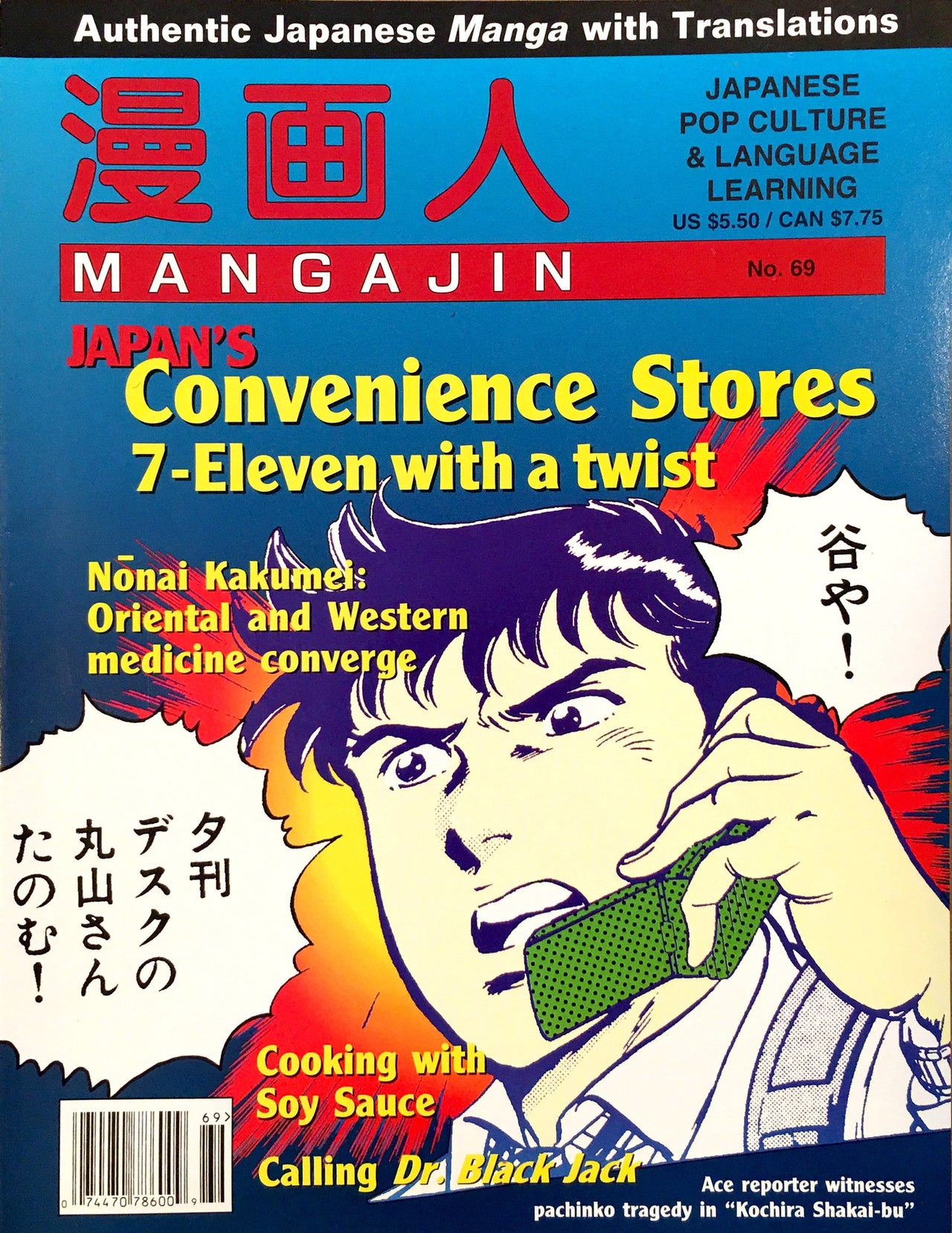
Mangajin 69
PLEASE NOTE: Mangajin ceased publication in 1998. These back issues may be new or used, but they will not be pristine. A few are still in sealed bags (for mailing), but even those are unlikely to be pristine due to shelf-wear and the amount of time passed. Please consider these as learning tools to be used rather than for collecting. That being said, if condition is important to you, please contact us with specific issues and we'll send you photos of the actual items.
Mangajin was a wonderful magazine for learners of Japanese. Each issue somehow had something for every level, but we recommend them most for upper beginners.
Those interested in translation will love how Mangajin breaks down the manga it presents, explaining grammar, vocabulary, and cultural references with ease.
The cover image above and the table of contents below are for this particular issue. The extra sample pages inside may or may not be from this exact issue.
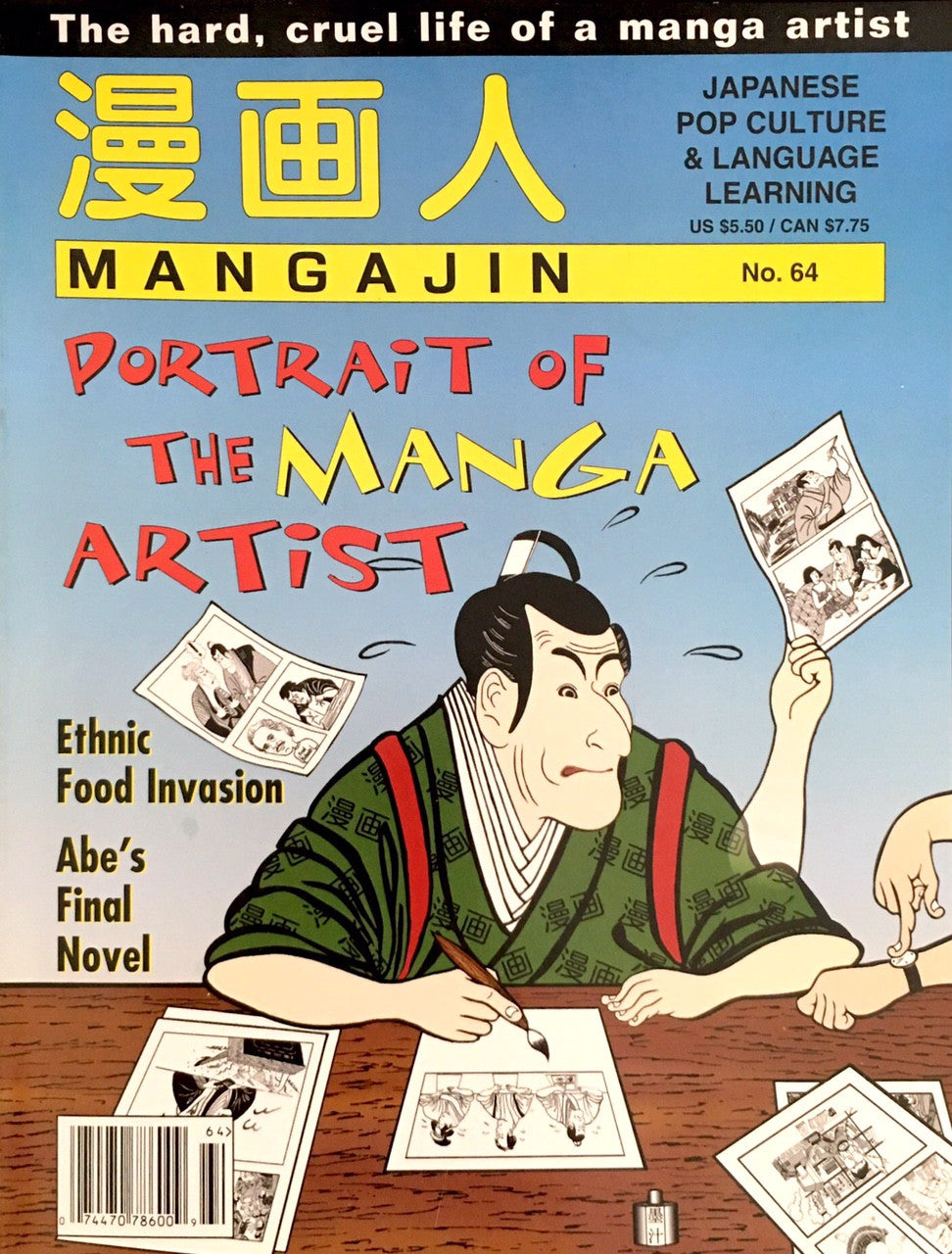
Mangajin 64
PLEASE NOTE: Mangajin ceased publication in 1998. These back issues may be new or used, but they will not be pristine. A few are still in sealed bags (for mailing), but even those are unlikely to be pristine due to shelf-wear and the amount of time passed. Please consider these as learning tools to be used rather than for collecting. That being said, if condition is important to you, please contact us with specific issues and we'll send you photos of the actual items.
Mangajin was a wonderful magazine for learners of Japanese. Each issue somehow had something for every level, but we recommend them most for upper beginners.
Those interested in translation will love how Mangajin breaks down the manga it presents, explaining grammar, vocabulary, and cultural references with ease.
The cover image above and the table of contents below are for this particular issue. The extra sample pages inside may or may not be from this exact issue.
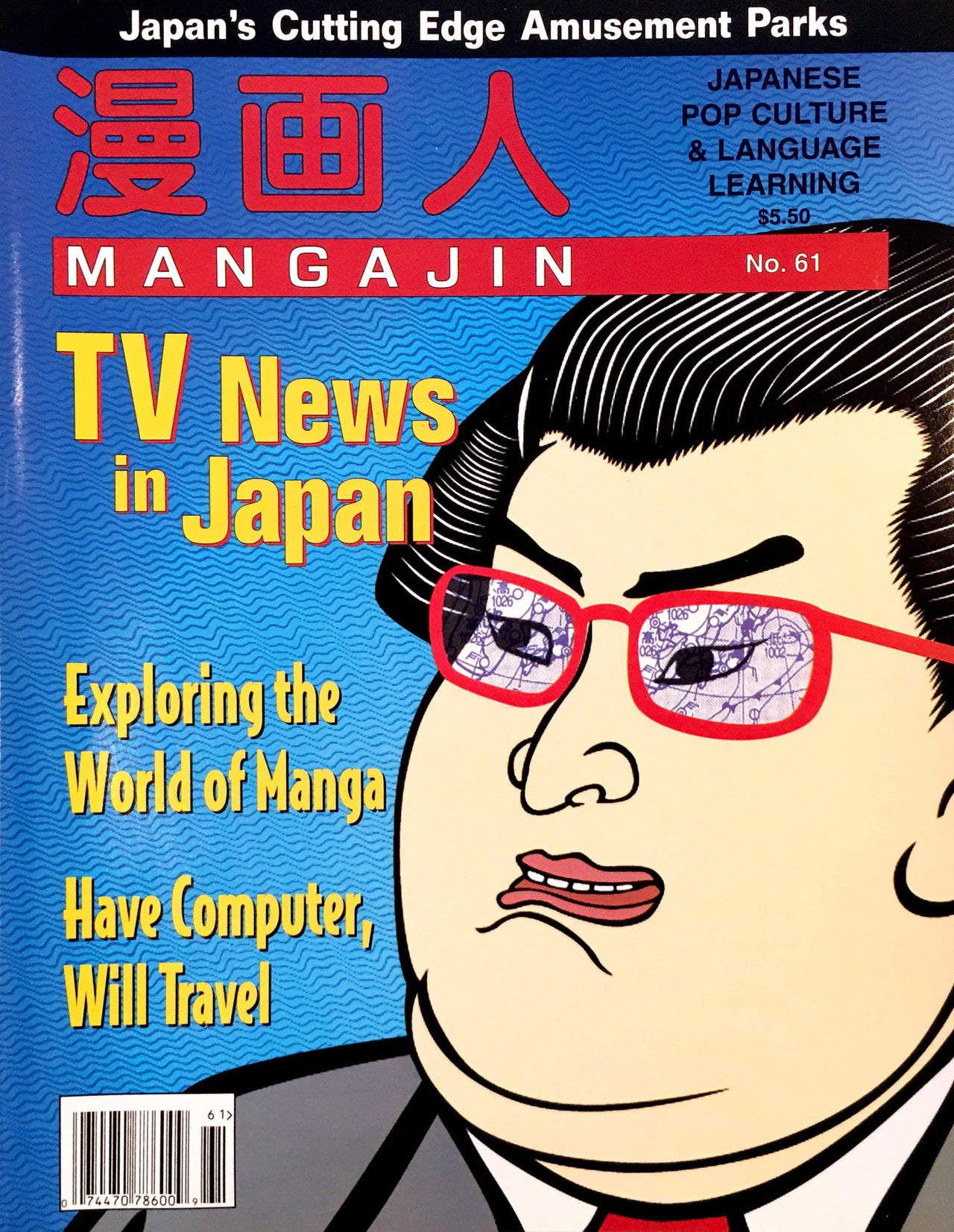
Mangajin 61
PLEASE NOTE: Mangajin ceased publication in 1998. These back issues may be new or used, but they will not be pristine. A few are still in sealed bags (for mailing), but even those are unlikely to be pristine due to shelf-wear and the amount of time passed. Please consider these as learning tools to be used rather than for collecting. That being said, if condition is important to you, please contact us with specific issues and we'll send you photos of the actual items.
Mangajin was a wonderful magazine for learners of Japanese. Each issue somehow had something for every level, but we recommend them most for upper beginners.
Those interested in translation will love how Mangajin breaks down the manga it presents, explaining grammar, vocabulary, and cultural references with ease.
The cover image above and the table of contents below are for this particular issue. The extra sample pages inside may or may not be from this exact issue.
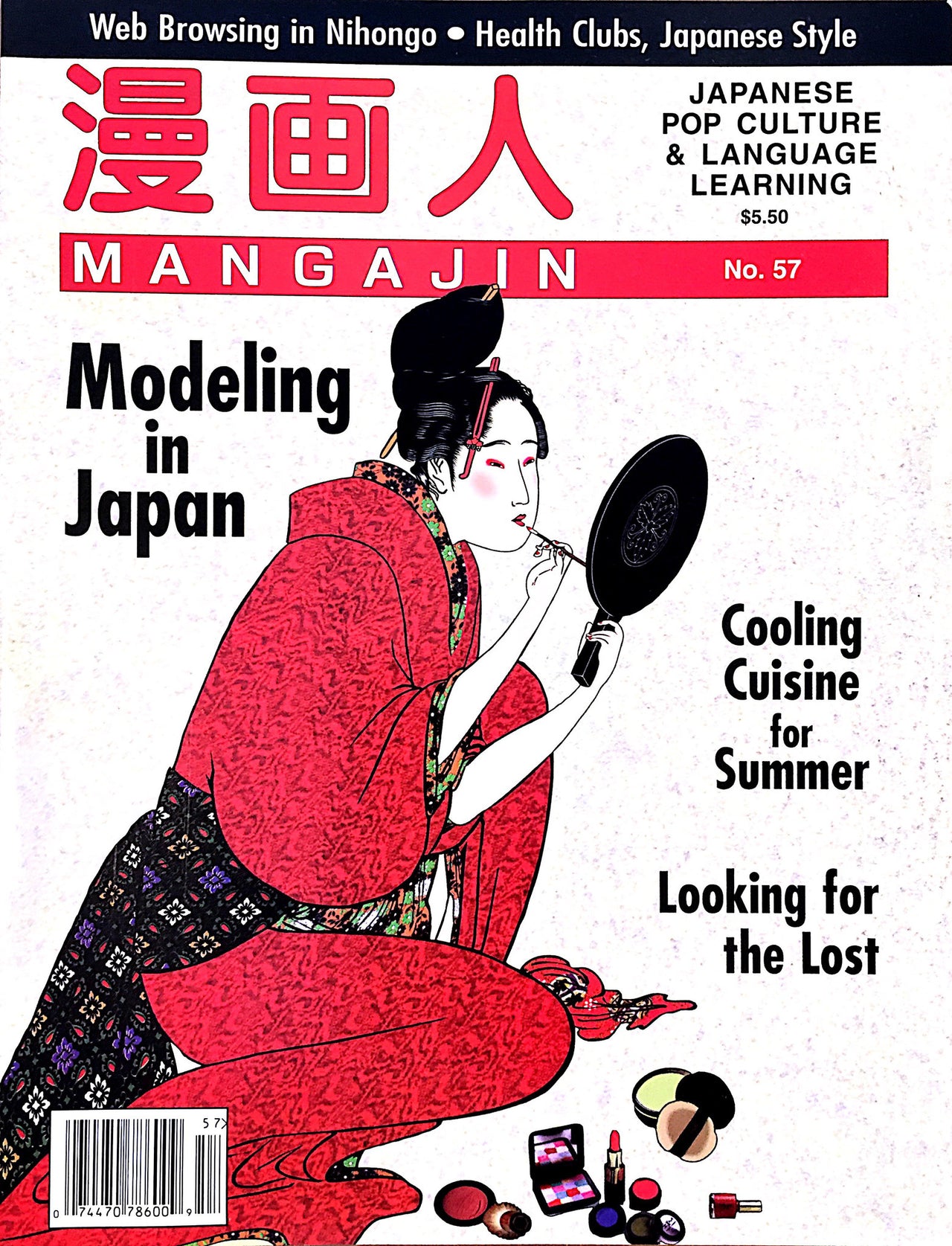
Mangajin 57
PLEASE NOTE: Mangajin ceased publication in 1998. These back issues may be new or used, but they will not be pristine. A few are still in sealed bags (for mailing), but even those are unlikely to be pristine due to shelf-wear and the amount of time passed. Please consider these as learning tools to be used rather than for collecting. That being said, if condition is important to you, please contact us with specific issues and we'll send you photos of the actual items.
Mangajin was a wonderful magazine for learners of Japanese. Each issue somehow had something for every level, but we recommend them most for upper beginners.
Those interested in translation will love how Mangajin breaks down the manga it presents, explaining grammar, vocabulary, and cultural references with ease.
The cover image above and the table of contents below are for this particular issue. The extra sample pages inside may or may not be from this exact issue.
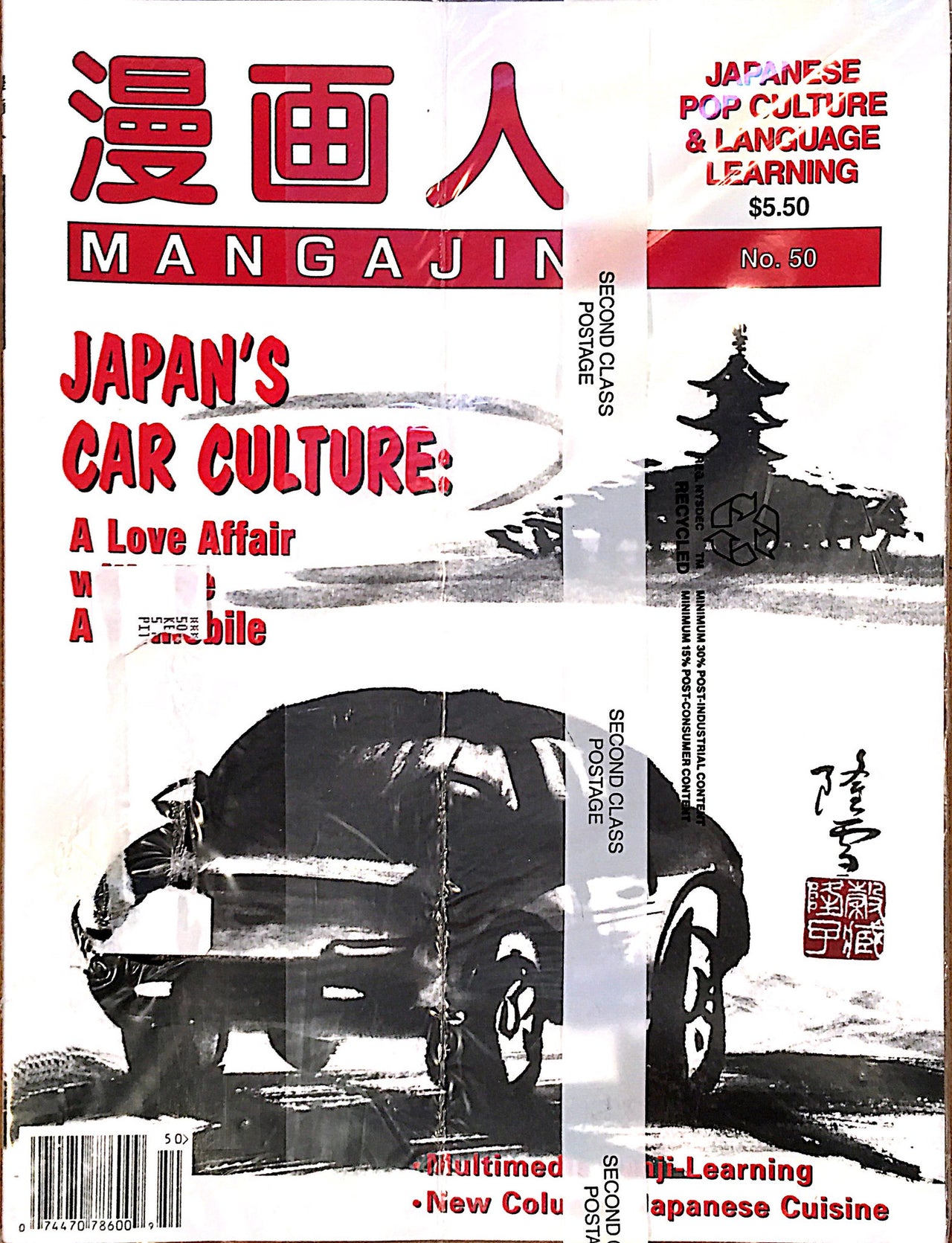
Mangajin 50
PLEASE NOTE: Mangajin ceased publication in 1998. These back issues may be new or used, but they will not be pristine. A few are still in sealed bags (for mailing), but even those are unlikely to be pristine due to shelf-wear and the amount of time passed. Please consider these as learning tools to be used rather than for collecting. That being said, if condition is important to you, please contact us with specific issues and we'll send you photos of the actual items.
Mangajin was a wonderful magazine for learners of Japanese. Each issue somehow had something for every level, but we recommend them most for upper beginners.
Those interested in translation will love how Mangajin breaks down the manga it presents, explaining grammar, vocabulary, and cultural references with ease.
The cover image above is for this particular issue. The sample pages inside may or may not be from this exact issue.
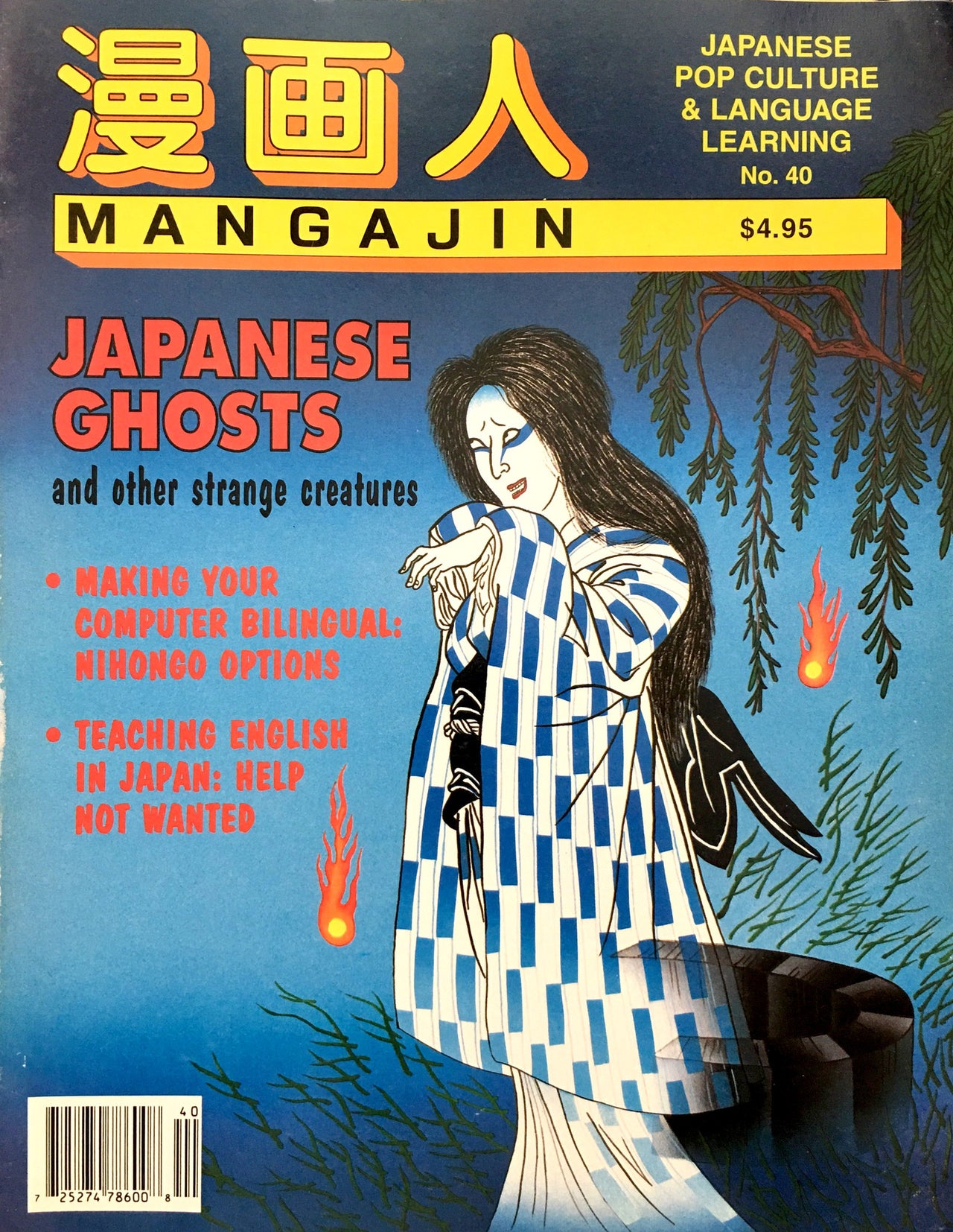
Mangajin 40
PLEASE NOTE: Mangajin ceased publication in 1998. These back issues may be new or used, but they will not be pristine. A few are still in sealed bags (for mailing), but even those are unlikely to be pristine due to shelf-wear and the amount of time passed. Please consider these as learning tools to be used rather than for collecting. That being said, if condition is important to you, please contact us with specific issues and we'll send you photos of the actual items.
Mangajin was a wonderful magazine for learners of Japanese. Each issue somehow had something for every level, but we recommend them most for upper beginners.
Those interested in translation will love how Mangajin breaks down the manga it presents, explaining grammar, vocabulary, and cultural references with ease.
The cover image above is for this particular issue. The sample pages inside may or may not be from this exact issue.

Mangajin 36
PLEASE NOTE: Mangajin ceased publication in 1998. These back issues may be new or used, but they will not be pristine. A few are still in sealed bags (for mailing), but even those are unlikely to be pristine due to shelf-wear and the amount of time passed. Please consider these as learning tools to be used rather than for collecting. That being said, if condition is important to you, please contact us with specific issues and we'll send you photos of the actual items.
Mangajin was a wonderful magazine for learners of Japanese. Each issue somehow had something for every level, but we recommend them most for upper beginners.
Those interested in translation will love how Mangajin breaks down the manga it presents, explaining grammar, vocabulary, and cultural references with ease.
The cover image above and the table of contents below are for this particular issue. The extra sample pages inside may or may not be from this exact issue.

Mangajin 33
PLEASE NOTE: Mangajin ceased publication in 1998. These back issues may be new or used, but they will not be pristine. A few are still in sealed bags (for mailing), but even those are unlikely to be pristine due to shelf-wear and the amount of time passed. Please consider these as learning tools to be used rather than for collecting. That being said, if condition is important to you, please contact us with specific issues and we'll send you photos of the actual items.
Mangajin was a wonderful magazine for learners of Japanese. Each issue somehow had something for every level, but we recommend them most for upper beginners.
Those interested in translation will love how Mangajin breaks down the manga it presents, explaining grammar, vocabulary, and cultural references with ease.
The cover image above is for this particular issue. The sample pages inside may or may not be from this exact issue. See below for a table of contents (retrieved from http://www.nyx.net/~cbrown/mangajin/mangajin_toc.html)
TV Dating ShowsMating for Ratings
Also in this issue:Glossary of Japanese Computer TermsThe Laughing SalesmanDr. Slump
FEATURES
特集
tokushu
10
TV Dating Shows
Japanese women no longer need to get married. They have to be persuaded, and Japanese men are finding this increasingly difficult. TV dating shows portray this contemporary social drama and even help some young singles to find a mate.
DEPARTMENTS
連載/コラム
rensai / koramu
4
Letters & Bloopers The readers write.
7
Brand News (Innovative uses of the Japanese language)
It was once fashionable and sexy to blacken your teeth in Japan. This ad for a cigarette filter-pipe refers to that practice in its punning slogan.
18
Book Review Japanese Jive, by Caroline McKeldin; Bill Emmott's Japanophobia and Dennis Encarnation's Rivals Beyond Trade.
22
Computer corner: A Glossary of Japanese Computer Technology
Computer terminology is hard enough in your native language! The jargon is evolving so quickly that computer dictionaries are out of date in just a few years, but we provide you with a glossary of over 180 terms and error messages (may you never have to read them).
30
Basic Japanese: Iya
Although Iya can be used to express strong negative feelings, it's employed in a variety of other situations. (The variant Ya da is one of the most widely-used expressions among Japanese high school girls.) Mangajin gives you the complete scoop through manga examples.
44
Warning & Pronunciation Guide
84
Vocabulary Summary
86
Classifieds
MANGA
漫画
manga
26
Calvin and Hobbes, by Bill Watterson
27
The Far Side, by Gary Larson
36
Take'emon-ke no Hitobito · タケエモン家のひとびと, by Sato Take'emon
38
Selected Works of Ishii Hisaichi · いしいひさいち選集
40
OL Shinkaron · OL進化論, by Akizuki Risu
45
What's Michael · by Kobayashi Makoto
56
A Visual Glossary of Modern Terms · 図説現代用語便覧, by Deluxe Company
65
Warau Serusuman (Part I) · 笑うせぇるすまん, by Fujiko Fujio (A)
73
Dr. Slump (Part II) · Dr.スランプ, by Toriyama Akira
![Nihongo Nano Narratives Volume 1: Cultural Icons of Japan [PAPERBACK]](http://www.thejapanshop.com/cdn/shop/files/NIHONGONANONARRATIVEScoversmall_1280x.jpg?v=1697975286)
Nihongo Nano Narratives Volume 1: Cultural Icons of Japan [PAPERBACK]
For upper beginners.
Embark on the journey! Dare to tackle short Japanese passages, and if you emerge triumphantly at the chapter's end, you'll have completed your mission, acquiring cultural insights, fresh vocabulary, and enhanced reading comprehension along the way.
Dive into news, cultural pieces, and historical snippets with this innovative series featuring engaging and informative ultra-brief essays in Japanese, tailored to upper beginner and intermediate proficiency levels.
Learn about Japanese culture
Includes all the sound files and Anki flashcard decks of all the vocabulary in the essays. You'll receive a download link immediately after purchasing the paperback which will also be mailed to you.
Enhance your Japanese vocabulary and reading abilities using the Nihongo Nano Narrative essays. Although you can tackle these lessons in any sequence, consider these helpful suggestions:
- Examine the Key Vocabulary
- Begin utilizing the provided Anki deck to learn unfamiliar vocabulary (refer to the last page for the download link)
- Read the story in either the EASY version or the native-level NORMAL version, or both, with furigana and a running glossary
- Listen to the audio file while reading once more (also check the last page for the download link)
- Read the essays without furigana or vocabulary aids
- Check your understanding with the English translation
Bravo! You've successfully completed that challenge.
WHO IS THIS FOR?
Though you're not a novice, it sometimes feels that way. Maintaining focus on lengthy Japanese texts proves challenging, and you seek assistance with kanji and advanced grammatical structures.If this resonates with you, this book is tailor-made for your needs.
FEATURES
Short but informative essays
Full vocabulary breakdowns
Tricky grammatical patterns explained
Anki flashcard decks
Sound files of the essays
Individual PDFs of the essays in a slightly different format to make it easier to print and study each essay individually
Simplified Essay Version
First, go through a simplified version of the essay. This essay version primarily has JLPT N4 and N5 grammar and vocabulary. Every word is defined and explained.
Intermediate Essay Version
Next, tackle the intermediate essay. This version contains most of the information from the simplified version but uses more natural Japanese. Every word is defined and explained.
Essays with English translation
Finally, go through both essays again while checking your understanding with our translations.
126 Pages
ISBN 979-8395279866
Physical Paperback mailed
Includes PDF, ePub, and MOBI files [No extra charge]
Includes Sound Files of all Essays [No extra charge]
Includes Anki flashcard decks for the vocabulary in each of the essays [No extra charge]
Ready to get started? Click to buy now.
![Learn Japanese with Yokai! Tengu [Paperback]](http://www.thejapanshop.com/cdn/shop/products/cover-500_1ed4ad36-c67b-475a-944d-0eec8ce33672_1280x.jpg?v=1640796567)
Learn Japanese with Yokai! Tengu [Paperback]
Learn Japanese with Yōkai Vol. 2: The Tengu [PAPERBACK + DIGITAL]
A folklore-based Japanese reader for upper beginners who want to strengthen reading and listening skills through traditional stories of old Japan.
Physical paperback • Includes free digital files for this volume (PDF + MP3 audio)
Format Preview (From Another Volume)
This preview is from a different book in the series and is provided to show the format, layout, audio style, and learning approach. Your Tengu volume follows the same structure.
Normal Speed Audio (Sample)
Slow Speed Audio (Sample)
PDF Preview (Sample) Open in new tab
About This Volume
Living in shadows and the in-between world of dreams and reality, yōkai thrive in the Japanese imagination. They may appear as monsters, ghosts, unnatural beings, or even everyday objects that have taken on a life of their own.
In this volume, you’ll explore the world of the tengu, legendary creatures associated with mountains and deep forests. While often mischievous or frightening, tengu are also known to show kindness and even wisdom toward humans.
Early depictions portrayed tengu as bird-like creatures. Over time, they came to be represented as ascetic mountain priests known as yamabushi. Unlike ordinary yamabushi, tengu possess unnaturally long noses, carry a scroll called the tora no maki, and wield powerful magic.
According to legend, tengu may have even taught ninjas their mysterious skills.
What This Book Includes
Three essays / stories centered on the tengu
Each story presented in three formats:① Sentence-by-sentence Japanese with explanations② Japanese-only version to test reading ability③ Full English translation to confirm understanding
Sentence-by-sentence sections include furigana over kanji, a complete glossary, and clear explanations of important grammar patterns in plain English
Free audio downloads included (link provided on the final page of the book)
Each story includes both normal-speed and slow-speed recordings read by Yumi
Stories Included
About the Tengu
Origin of the Tengu
Tengu Stories
Who Is This Book For?
This book is designed so that both newer learners and intermediate learners can find value. The ideal level, however, is upper beginner, roughly around JLPT N4.
If you already know basic grammar and kana and want to start reading real Japanese— with guidance—this book is a natural next step.
Interested in yōkai, folklore, and learning Japanese through stories?
Click Add to Cart and continue your journey into Japan’s mysterious mountain world.