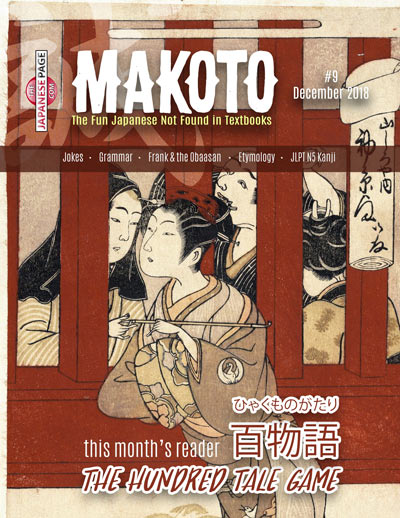
Makoto Japanese e-Zine #9 December 2018
➡️ WAIT! Want to save a dollar and get the latest issue each month? Become a member of our Makoto+ club and not only save and download new Makoto issues, but also access web-versions of the past three Makoto issues. Want more? Well, Makoto+ members also get a 10% reusable coupon good for anything at theJapanShop.com and each month, we will post a new eBook for you to download free of charge. Subscribe today for only $3 a month or $36 a year. Cancel at any time! Click here to learn more.
IN THIS ISSUE:
NEW READER: Frank and the Obaasan & The Hundred Tales Game37 Pages
* Laughs, Jokes, Riddles, and Puns* Prefecture Spotlight: Nagasaki* Etymology: Oyatsu* Phrase of the Day: Tomorrow is another day* Kanji Spotlight: Directions* Grammar Time! Using Ne* Frank and the Obaasan Reader, Grammatical Notes, Kanji Notes, and English Translation* The Hundred Tales Game
➡️ LEARN ABOUT BECOMING A MAKOTO+ MEMBER. CLICK HERE
![Japanese Grammar for JLPT N4-Master the Japanese Language Proficiency Test N4 [Paperback]](http://www.thejapanshop.com/cdn/shop/products/JLPT-N4-cover_1280x.jpg?v=1656688241)
Japanese Grammar for JLPT N4-Master the Japanese Language Proficiency Test N4 [Paperback]
SAVE WITH DIGITAL! This item is included in a digital bundle at a discount. If you would like the eBook version (PDF, ePub, or Kindle MOBI) and the sound files, please see our discounted bundles here - JLPT N4 BUNDLE
--
The digital files (eBook and sound files) are included with the purchase of this paperback. Simply place your order and the download link will be emailed you immediately after puchase.
Japanese Vocabulary for JLPT N4 covers the grammar needed to pass the Japanese Language Proficiency Test level N4. This is the upper beginner level of the test and is suitable for upper beginners who have mastered the basics of Japanese.
Whether you are planning to take the Japanese Language Proficiency Test N4 or just would like to continue learning important Japanese grammatical points, this book will teach you the most useful grammatical patterns in an easy-to-understand way. Download the sound files and the accompanying PDF for a complete learning system (included for no extra charge).
UPPER BEGINNER LEVEL
Download the sound files for every Japanese example sentence within. Link emailed to you immediately after purchase.
Explanations in plain English with several examples per grammar point.
Example sentences are broken down with a literal word-by-word translation to aid comprehension.
Each kanji has furigana (small hiragana over the kanji)
Grammar Points Covered:
あとで
~ば/~れば
~ばいいですか
場合
ことができる
〜だす(出す)
できるだけ
どうも
~始める(始める)
~はずだ
~はずがない
~かどうか
~かもしれない
~に気がつく
~ことにする
~ことになる
~く/ ~にする
まま
まだ〜ていない
または
~みたい
~ながら
~ないで
~ないでおく
~なくてもいい(不必要)
~なくてはならない
なら
~なさい
~にくい
~のですか・んですか
~のは~だ
~のような
~のように
のに
お~ください
~られる
~させる
~させられる
~せいで
~し
そうだ
~そうだ
すぎる
~たばかり
~たがる
~たら
~たらどうですか
~てあげる
~ているあいだに~
~ていただけませんか
~てくれる
~てくれてありがとう
〜てみる
~てもらう
~ておく
~てくる・~ていく
~てくる #2
~てしまう
~てすみません
~てよかった
~ても・〜でも
と
~という~
つづける(続ける)
~は~が
~やすい
~よう(だ)
~ようと思う
ぜひ
全然~ない
![Yonde Miyo~! Volume 2 - Short and Fun Japanese Stories in Hiragana and Basic Kanji [Paperback]](http://www.thejapanshop.com/cdn/shop/products/yondemiyo-vol-2-cover---500_1280x.jpg?v=1640718749)
Yonde Miyo~! Volume 2 - Short and Fun Japanese Stories in Hiragana and Basic Kanji [Paperback]
Yonde Miyo~! Volume 2 is a beginner Japanese reader written in hiragana and basic kanji, with furigana on every kanji and native audio, an easy first step before longer graded readers. The code printed in the back unlocks the stories in the free Makoto Japanese Explorer app for iPhone, iPad and Android, where you can tap any word for its reading and meaning.
NOTE: The digital version is found in the Beri- Beri- Shoshinsha bundle.
Have you only recently learned hiragana but need practice? Or perhaps, your hiragana is no problem, but you want to build your hiragana and kanji reading comprehension?
This new collection of stories is here to the rescue!
Read real Japanese—beginner level but not boring Japanese! You won't find the Japanese version of Dick and Jane, but you will find stories written for adults. Enjoy reading flash fiction, super short essays, and funny stories of common mistakes made by learners of Japanese.Best of all, the only requirement is that you can read hiragana and have a very basic understanding of Japanese. Vocabulary and grammar will be defined and explained.
The format is a little different from our other more advanced readers. The idea is for the reader to read the entire story three times. Each page will have a sentence or two in hiragana (with spaces between words for you to see “words” instead of syllables) at the top and that same content in full Japanese (with furigana—small hiragana over kanji) at the bottom. The middle will have the glossary and grammatical explanations. Lastly, the story is presented in Japanese without furigana. See if you can read it after going through the previous two versions and explanations.
If you have just learned hiragana, you may want to listen to the sound file while reading the hiragana section to practice correct pronunciation. If you have studied Japanese a bit longer, you may want to start with the bottom version and take note of the glossary for understanding.The glossary will have the word as it appears in the story, but it will also give the “dictionary” form so you can look the word up further.
Having fun while learning a language is a great way to increase motivation. With increased motivation, you are less likely to skip a day's study. A skipped day can quickly become a lost week and then a lost… forever.
And so, we hope you will have as much fun reading these stories as we had writing them.
This is a physical paperback which will be shipped to you. You'll also receive the digital files for no extra charge immediately after ordering.
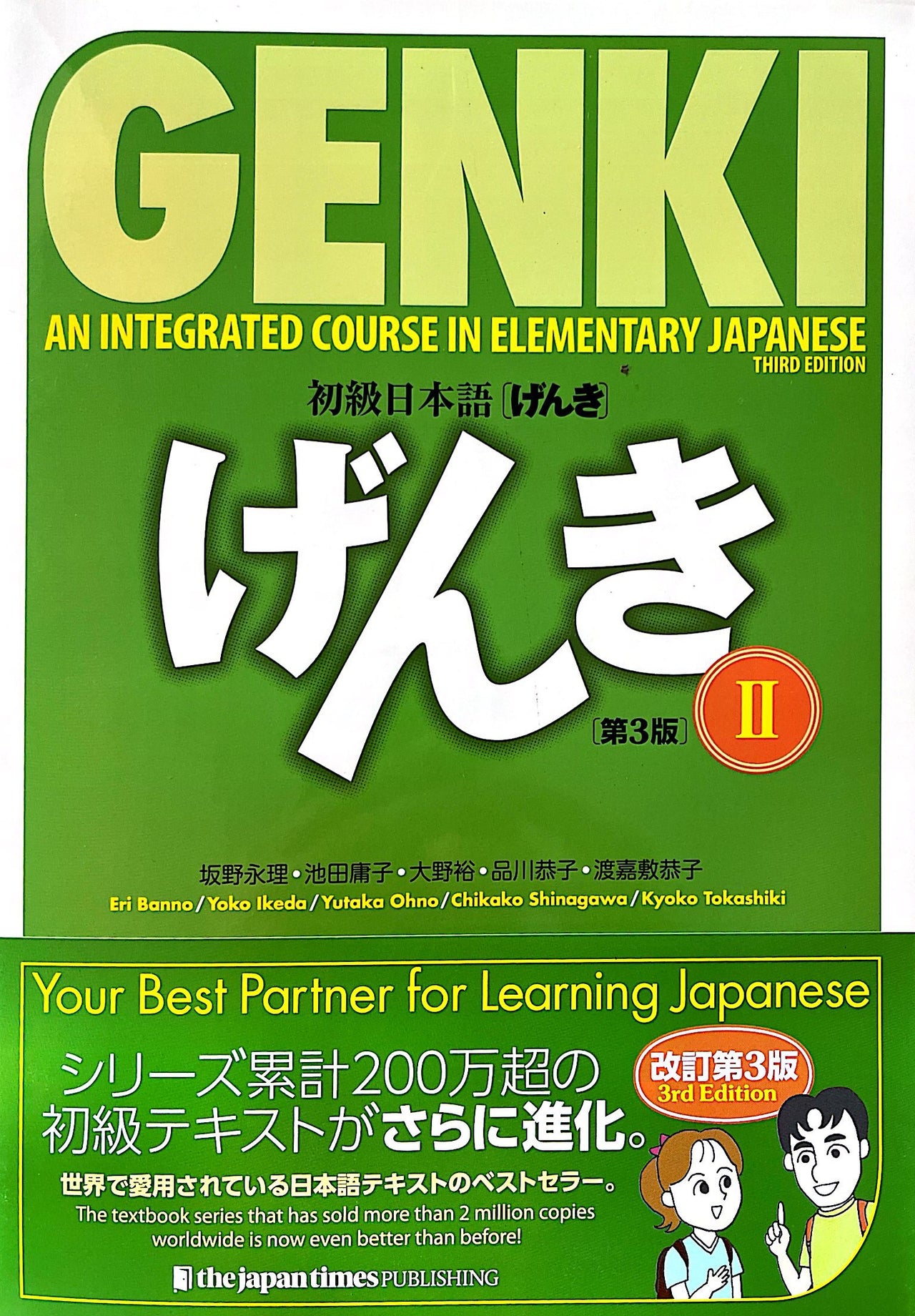
Genki II Textbook (3rd Newest Edition)
The Genki series is a very popular Japanese textbook used by students and teachers around the world. It works well in the classroom as well as for individual study.
For the self-study student, we recommend getting the workbook if you have someone who can check your work and penmanship. Otherwise, you might want to just start with the textbook.
Genki gives students a solid grounding in all four language skills: listening; speaking; reading; and writing
390 pages
Brand New 3rd Edition
ISBN 978-4-7890-1732-9
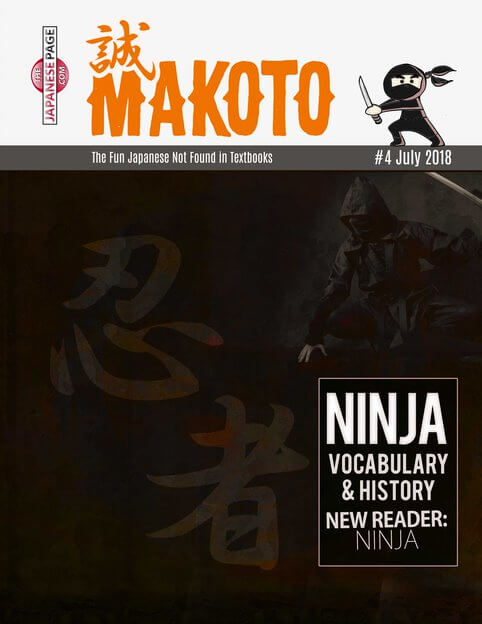
Makoto Japanese e-Zine #4 July 2018
➡️ WAIT! Want to save a dollar and get the latest issue each month? Become a member of our Makoto+ club and not only save and download new Makoto issues, but also access web-versions of the past three Makoto issues. Want more? Well, Makoto+ members also get a 10% reusable coupon good for anything at theJapanShop.com and each month, we will post a new eBook for you to download free of charge. Subscribe today for only $3 a month or $36 a year. Cancel at any time! Click here to learn more.
IN THIS ISSUE:
NEW READER: Ninja
* Laughs, Jokes, Riddles, and Puns* Prefecture Spotlight: Aichi* Etymology* Phrase of the Day: Love Words* Japanese Art: Byobu* Kanji Spotlight* Grammar Time! * Reader: Ninja!
➡️ LEARN ABOUT BECOMING A MAKOTO+ MEMBER. CLICK HERE
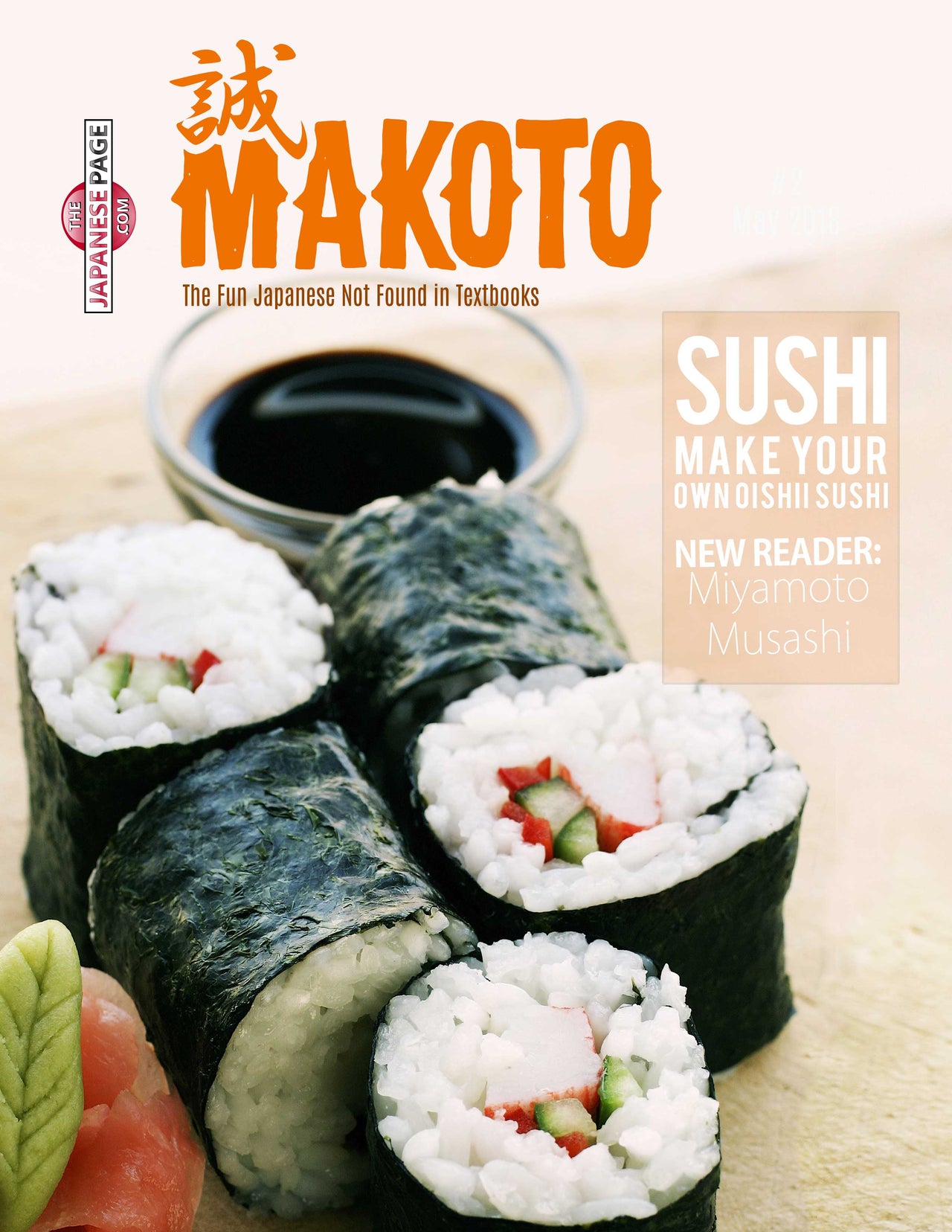
Makoto Japanese e-Zine #3 June 2018
➡️ WAIT! Want to save a dollar and get the latest issue each month? Become a member of our Makoto+ club and not only save and download new Makoto issues, but also access web-versions of the past three Makoto issues. Want more? Well, Makoto+ members also get a 10% reusable coupon good for anything at theJapanShop.com and each month, we will post a new eBook for you to download free of charge. Subscribe today for only $3 a month or $36 a year. Cancel at any time! Click here to learn more.
IN THIS ISSUE:
Sushi: How to Make Sushi Easy and Cheap NEW READER: Miyamoto Musashi
* Laughs, Jokes, Riddles, and Puns: おやじギャグ* Prefecture Spotlight: Toyama* Etymology: 二枚目* Phrase of the Day: Useful English proverbs in Japanese* Ukiyo-e: Hokusai* Kanji Spotlight: 金* Grammar Time! 予定 and つもり* Reader: Miyamoto Musashi, Japan's Greatest Swordsman
➡️ LEARN ABOUT BECOMING A MAKOTO+ MEMBER. CLICK HERE
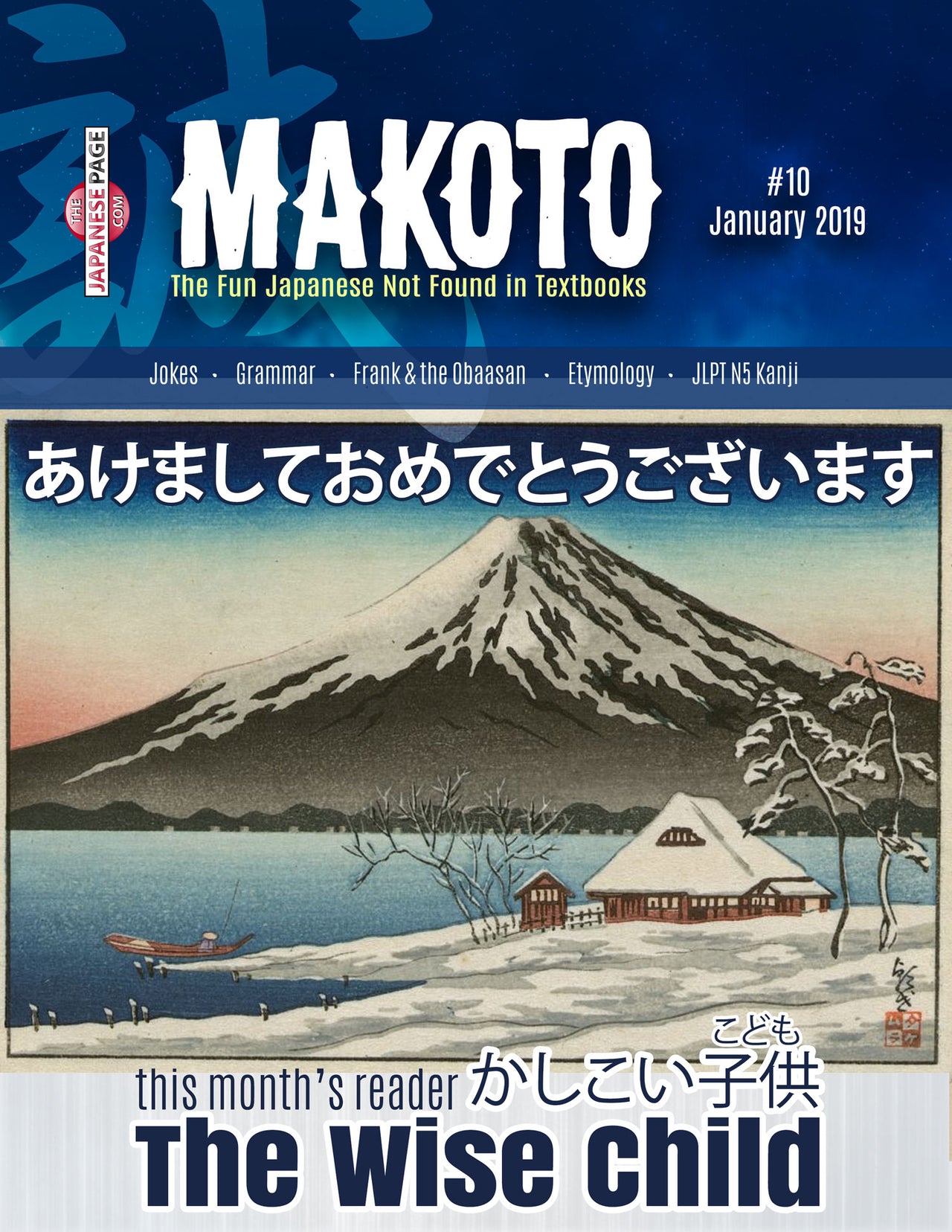
Makoto Japanese e-Zine #10 January 2019
➡️ WAIT! Want to save a dollar and get the latest issue each month? Become a member of our Makoto+ club and not only save and download new Makoto issues, but also access web-versions of the past three Makoto issues. Want more? Well, Makoto+ members also get a 10% reusable coupon good for anything at theJapanShop.com and each month, we will post a new eBook for you to download free of charge. Subscribe today for only $3 a month or $36 a year. Cancel at any time! Click here to learn more.
IN THIS ISSUE: New Year's Special Issue
NEW READERS: Frank and the Obaasan & The Wise Child31 Pages
* Laughs, Jokes, Riddles, and Puns
* Prefecture Spotlight: Saga
* Etymology: New Year's Eve in Japanese
* Phrase of the Day: New Year's Greetings
* Kanji Spotlight: Kanji Stroke Order Rules
* Grammar Time! GA as a conjunction
* Frank and the Obaasan Reader, Grammatical Notes, Kanji Notes, and English Translation [Beginner Level]
* The Wise Child Reader [Beginner Level]
➡️ LEARN ABOUT BECOMING A MAKOTO+ MEMBER. CLICK HERE
![101 Common Japanese Idioms in Plain English [Paperback + Digital Download] - The Japan Shop](http://www.thejapanshop.com/cdn/shop/products/101idioms-cover_830ad4be-4a6e-4a87-95da-4df6de6d2481_1280x.jpg?v=1581114125)
101 Common Japanese Idioms in Plain English
SAVE WITH DIGITAL! This item is included in a digital bundle at a discount. If you would like the eBook version (PDF, ePub) and the MP3s, please see our discounted bundles here - Japanese Vocabulary Booster Value Pack
WHICH FORMAT SHOULD I GET?Paperback: Requires shippingDigital Download: Get instant access of the ebook and sound files
Learn 101 useful Japanese idioms. What happens if your mouth is heavy? Or if you use people with your chin? Or when you grind sesame? Find out all about these idioms and much more. Beginners can get a lot out of this product, but hiragana and very basic Japanese is recommended.
200 page paperback
Printable PDF
Over 300 MP3s with each phrase and example sentence
Flash eBook for interactive studying and listening
Works on both PCs and Macs
NOW FREE Kindle and Nook ebook versions
ePub works on Android devices with FBReader and possibly other EPUB book reader apps.
Once one zooms beyond the basics of a language, idiomatic expressions, proverbs, and slang can provide the spice to keep motivation up and progress going forward.
This book will introduce 101 of the most common Japanese idioms.
We are including at no extra charge MP3s for all the examples found in this book. Create playlists to study on the go or burn the sound files to a CD to listen at home. The download link is found on the last page. We believe the best way to learn vocabulary–by far–is to study words within their proper context. Every idiom is followed by an example sentence and a paragraph or two explaining the context and usage.
Each idiom will have three sound files associated with it. The MP3s are all recorded by native voice actors and actresses. The first sound file is the idiom itself. The second is the example sentence. The third sound file has the idiom, an English translation, the idiom repeated slowly, and the example sentence with translation. Try to mimic the Japanese speakers in sound and presentation. We highly recommend knowing hiragana before tackling this book. Every kanji here has furigana (small hiragana) over it to aid reading. If you do not yet know hiragana, please check out our Hiragana book: “Hiragana, the Basics of Japanese.”
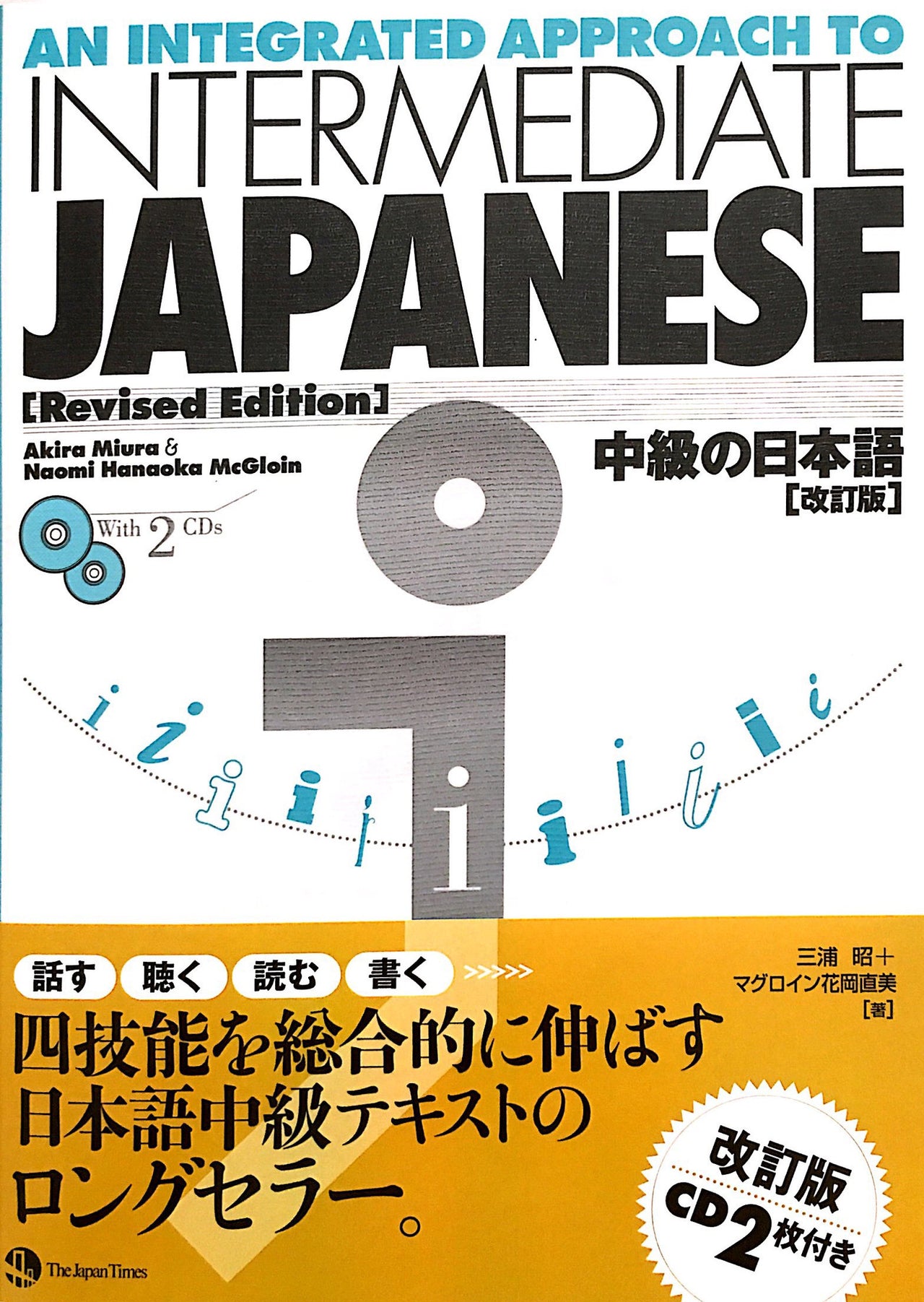
An Integrated Approach to Intermediate Japanese with 2 CDs
Excellent for Intermediates who have completed Genki II, and for those who have completed N3.
Students may also want the Workbook--especially if you have a teacher or a tutor who can check your work.
Includes 2 CDs
342 Pages
ISBN 978-4-7890-1307-9

Makoto Magazine #101 - All the Fun Japanese Not Found in Textbooks
Makoto E-Zine Series #101
Recommended for beginner to intermediate learners of Japanese.
You can purchase the printed version on Amazon by clicking here.
Makoto Japanese Language & Culture Magazine Issue 101 (July 2026) — the first issue of the next hundred
Makoto is a monthly digital magazine for beginner to intermediate learners of Japanese. Each issue blends short stories, language lessons, cultural notes, humor, and native-audio recordings — all designed to make Japanese feel natural, usable, and enjoyable.
In this issue (July 2026, Issue 101):
After the fireworks of issue #100, #101 gets to enjoy the quiet luxury of being a perfectly ordinary number — which means it's simply a magazine full of Japanese to dig into. Frank clocks in for a full shift at the diner, a rain-soaked stranger shows up at a castle gate claiming to be a princess, and the etymology section explains why the gods get credit for thunder. All in the fully redesigned format introduced last issue: PDF, ePub, web, and the iPhone & Android apps, all from the same source.
Readers:
Beginner Reader (Let's Read): 看板を読む子 (Reading the Signs) A bored kid in the back seat reads restaurant signs out the car window — and accidentally gives Mom entirely the wrong idea. Presented in hiragana-spaced and kanji+furigana formats for multiple reading passes, with grammar notes covering の modifiers, 何も~ない, ~ている, ~ことにする, のなら, and て-form sequencing.
Japanese Reader: えんどう豆の上のお姫さま (The Princess and the Pea) After last month's ghost story, something gentler: Andersen's classic retold in clear, approachable Japanese. A prince wants a real princess, and the queen has a testing method involving one very small pea and a great deal of bedding. Full vocabulary, grammar notes, and audio — watch for ~かどうか (whether or not), ~たり~たり, ~ようで, and the confident conclusion pattern ~にちがいない.
Frank and the Obaasan: Season 3, Episode 9 A Day at the Restaurant (定食屋の日常) Last month Frank got a job. This month he actually has to do it. A full day at the teishoku diner — morning prep, lonely regulars, and Frank's particular gift for saying goodbye to fish. Includes structured Japanese, vocabulary/grammar support, and Japanese-only reading.
Language & culture lessons:
Grammar Time — Beginner: ~てもいい (JLPT N4) The everyday permission pattern: "you may ~" / "is it okay to ~?" — with examples across verbs, adjectives, and nouns.
Grammar Time — Intermediate: ~ものの (JLPT N2) The "although ~" pattern for when the first half of your sentence writes a check the second half can't cash — a contrast connector you'll meet constantly in written Japanese.
Onomatopoeia Focus: Rain しとしと, ざあざあ, and ぽつぽつ — three ways Japanese hears the rain, from a gentle drizzle to a downpour to the first scattered drops that make you regret not bringing an umbrella.
Vocabulary (5 entries, N5 to N1): いただきます, 久しぶり, 気になる, 念のため, and 気が置けない — graded across all five JLPT levels, each with usage notes, example sentences, and audio.
Etymology: 雷 Why is thunder called かみなり? Because to the ancient Japanese, it was quite literally the sound the gods make — a word history that traces the kanji back to lightning spreading across the sky beneath rainclouds.
Kanji Spotlight (JLPT N5 to N1): 館, 親, 登, 現, and 矛 — readings, meanings, stroke order, compound words, and example sentences for each.
Prefecture Spotlight: 神奈川 (Kanagawa) Home to Yokohama — one of Japan's first ports opened to foreign trade in 1859 and now home to the country's largest Chinatown — plus Kamakura's Great Buddha and more.
Anime Phrase of the Month 「同じ気持ちじゃない時、どうしたらいいんだろう?」 from ちいかわ — Hachiware wonders what to do when someone doesn't feel the same way. Small, cute, and quietly devastating, as Chiikawa tends to be.
Haiku Spotlight: 正岡子規 (Masaoka Shiki) 「ずんずんと夏を流すや最上川」— the mighty Mogami River sweeps summer itself downstream, in one of Shiki's most energetically modern-sounding classical haiku. With five English translations and full analysis.
Jokes & Riddles, Katakana Match (Nation Names), and more
Includes:
106 pages (PDF) in the fully redesigned Makoto format
27 MP3 audio files
4 Anki flashcard decks
2 eBook formats (PDF + ePub)
Scan-and-listen QR codes for quick mobile access
Full integration with the Makoto Japanese Explorer app and Sentence Explorer — magazine content is built into the Read tab with inline audio, tappable vocabulary, furigana-on-demand, translations, notes, and vocabulary tracking
Issue 101: no milestones, no fireworks — just a magazine full of Japanese worth digging into. Whether you're testing princesses with produce, learning to hear the rain in Japanese, or just here to see how Frank handles the lunch rush — welcome to the second hundred.
NOTE:
Digital and Print Versions Available (print on Amazon, digital here).
Digital version downloads are instant—no waiting.
No Dropbox account required. Download directly on PC/Mac or access files on mobile.
If you don't see your email right away, check your spam folder or contact us.
This series is also available on Amazon.
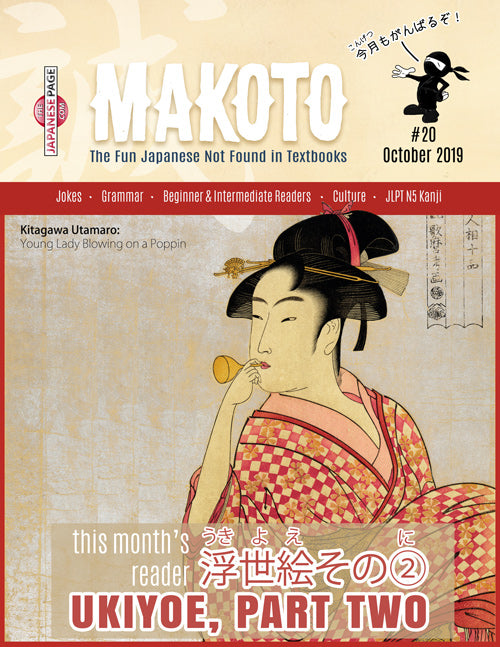
Makoto Japanese e-Zine #20 October 2019 | Digital Download + MP3s
➡️ WAIT! Want to save a dollar and get the latest issue each month? Become a member of our Makoto+ club and not only save and download new Makoto issues, but also access web-versions of the past three Makoto issues. Want more? Well, Makoto+ members also get a 10% reusable coupon good for anything at theJapanShop.com and each month, we will post a new eBook for you to download free of charge. Subscribe today for only $3 a month or $36 a year. Cancel at any time! Click here to learn more.
Makoto E-Zine series #20Recommended for beginners and lower intermediates of Japanese.FREE MP3s of the stories read by a native Japanese speaker--download link found on the last page. Listen while reading.The Fun Japanese Not Found in Textbooks. If you like our readers and lessons, you will love Makoto, the new e-zine filled with articles on kanji, culture, idioms, proverbs, geography, history, etymology, JLPT tips, Japanese trivia, and much more. Not only that, but every issue will include a brand new reader with newly recorded high-quality MP3s for you to download for no extra charge. IN THIS ISSUE: October 2019NEW READER: よんでみよう! Let's Read! & Ukiyoe, Part Two* Laughs, Jokes, Riddles, and Puns* Vocabulary* Prefecture Spotlight* Etymology* Phrase of the Day* Haiku: Basho* Kanji Spotlight* Grammar Time!* Japanese Readers: Yonde miyou! Let's Read! and Ukiyoe, Part Two
➡️ LEARN ABOUT BECOMING A MAKOTO+ MEMBER. CLICK HERE
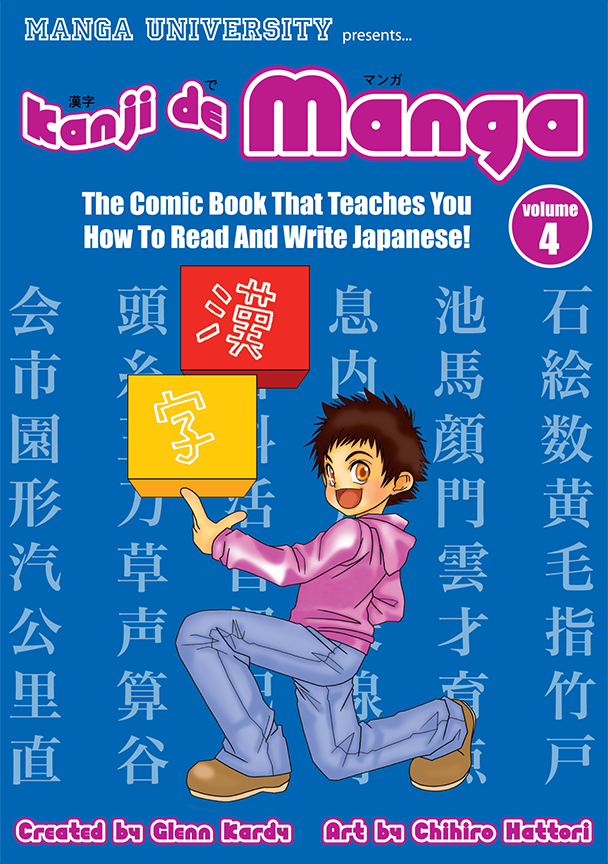
Kanji De Manga Volume 4: The Comic Book That Teaches You How To Read And Write Japanese! (v. 4)
Paperback. 144 pages. 7 x 5 inches.
-----------------
Our award-winning series moves forward with an all-new selection of 80 kanji geared toward intermediate learners of the language. Upon completion of this and the previous three volumes, students will have learned a total of 320 kanji, enough to prepare them for the advanced levels of the official Japanese Language Proficiency Test.
"A brilliant idea!" says Ronald A. Morse, retired professor of Japan Studies at UCLA and the University of Las Vegas, Nevada. "Japanese kanji — the written symbols adapted from Chinese — were originally drawings of images from real life. Japanese comic books and cartoons now provide fresh images to help us learn. Kanji de Manga uses today's manga images to make the kanji learning process fun and easy for otaku of all ages. This is a brilliant approach to learning the language."
Each page features its own comic strip, kanji pronunciation guide, stroke order, and English explanations.
Created by Glenn Kardy, editor of several volumes in the popular How to Draw Manga series, including Getting Started, the first book of its kind to be used at major universities in the United States (UCLA) and Japan (Waseda). Artwork by Chihiro Hattori, niece of legendary manga artist Eichi Fukui.